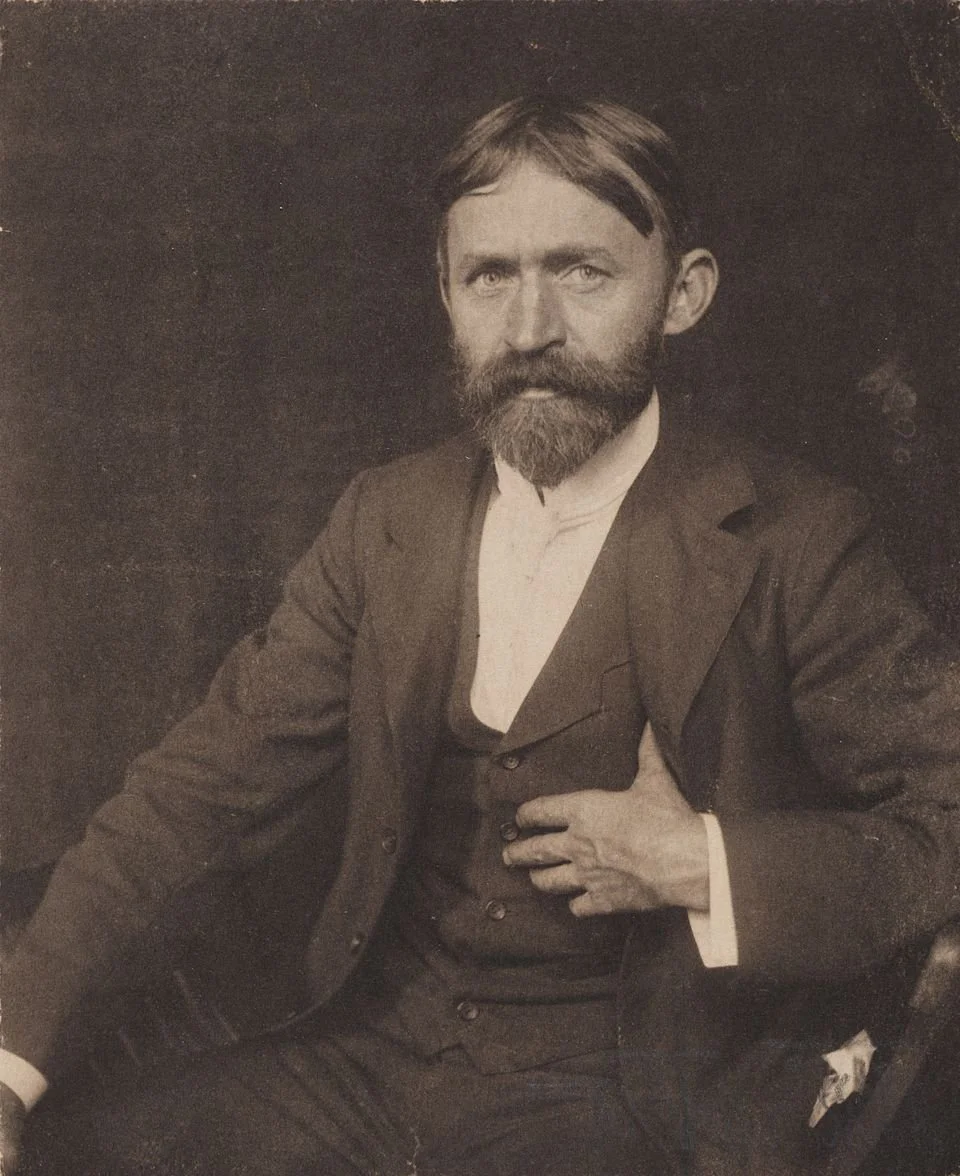
John Henry Twachtman (1853–1902)
was a leading figure in American Impressionism, celebrated for his poetic rural landscapes and his exquisitely subtle handling of light and atmosphere.
Originally trained in civil engineering at United States Military Academy, he soon turned decisively toward art. He studied under Frank Duveneck and, between 1875 and 1877, continued his education at the Academy of Fine Arts Munich, where his early work reflected the Munich school’s dramatic chiaroscuro and loose, painterly touch. From 1883 to 1885 he worked in Paris at Académie Julian, and his palette shifted toward softer gray-green harmonies. This period produced widely admired paintings such as Arques-la-Bataille (now in The Metropolitan Museum of Art) and Springtime (in the Cincinnati Art Museum).
After returning to the United States in 1886, Twachtman settled in Greenwich, where he purchased a farm and became closely associated with the Cos Cob art colony alongside artists such as Julian Alden Weir. The colony grew into a major center of East Coast Impressionism, and Twachtman’s independent temperament—alternating between sociable energy and introspective focus—helped shape its creative spirit. Unconcerned with commercial success, he preserved a rare artistic autonomy that encouraged experimentation and a deeply personal vision.
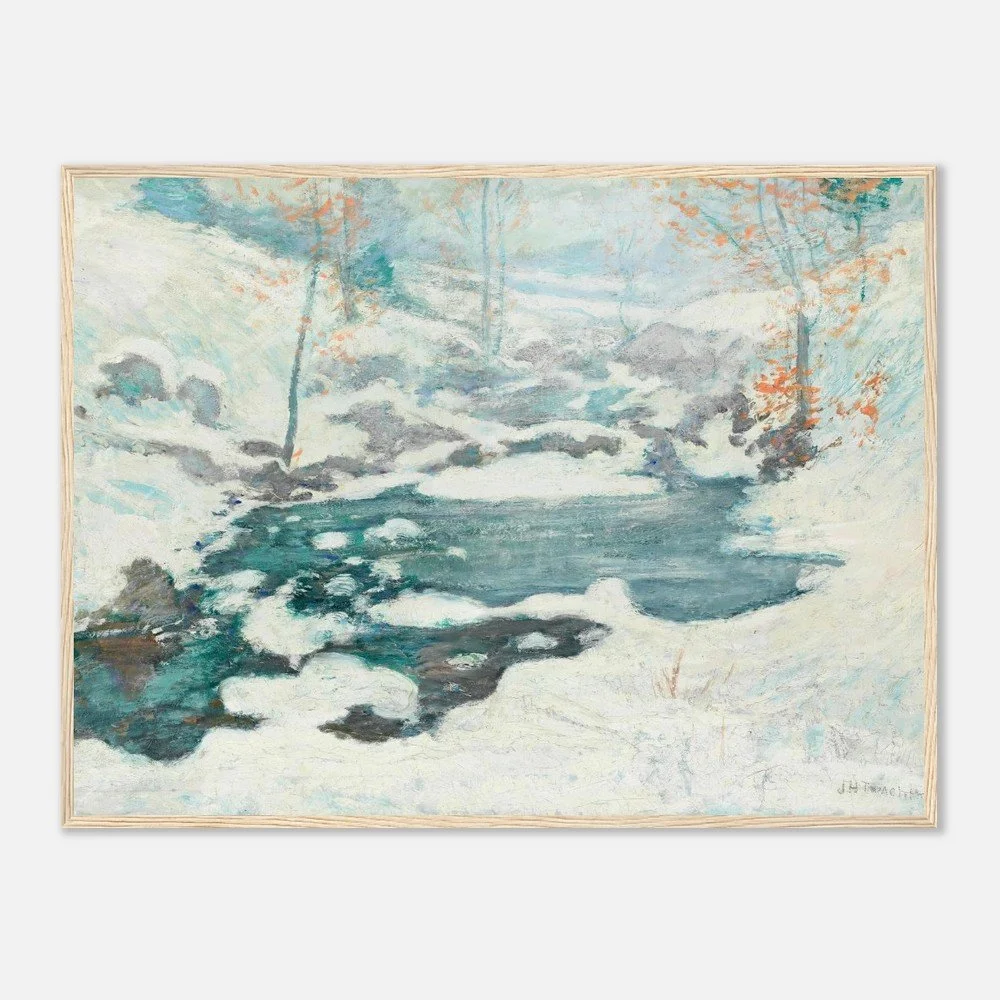
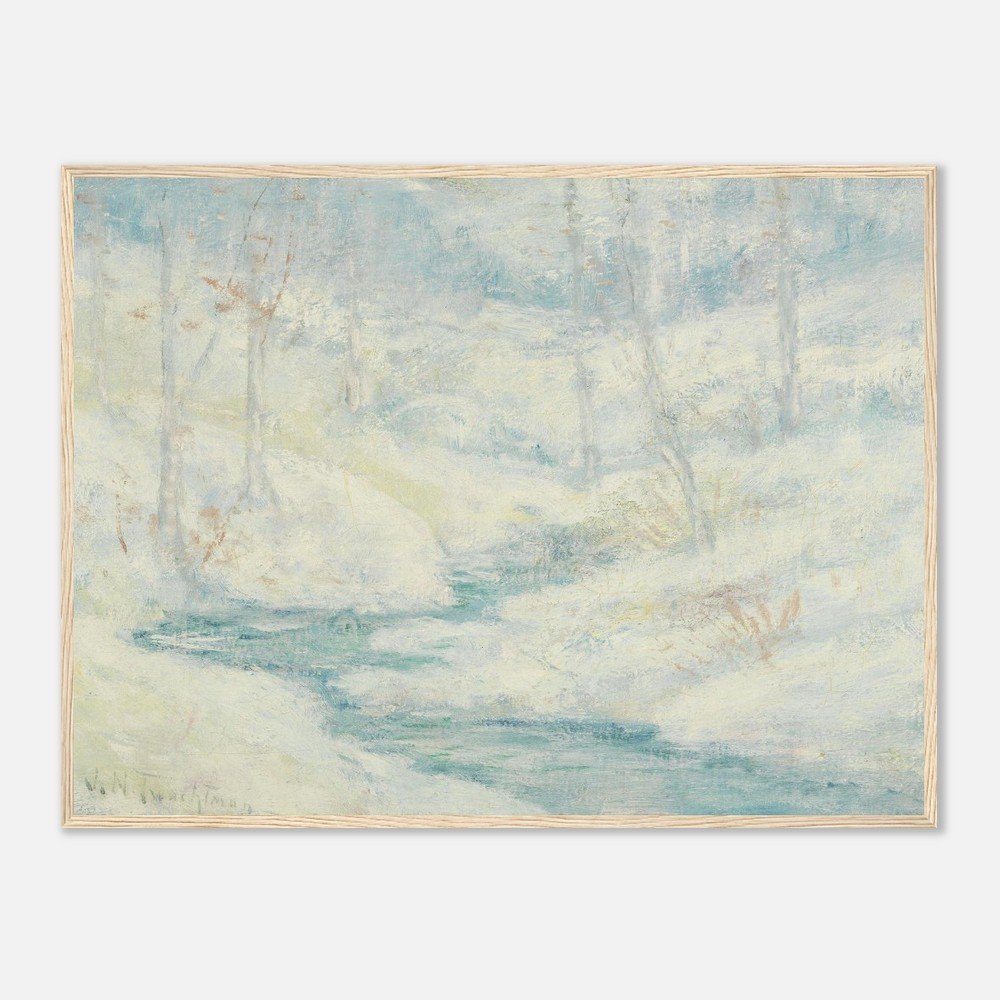
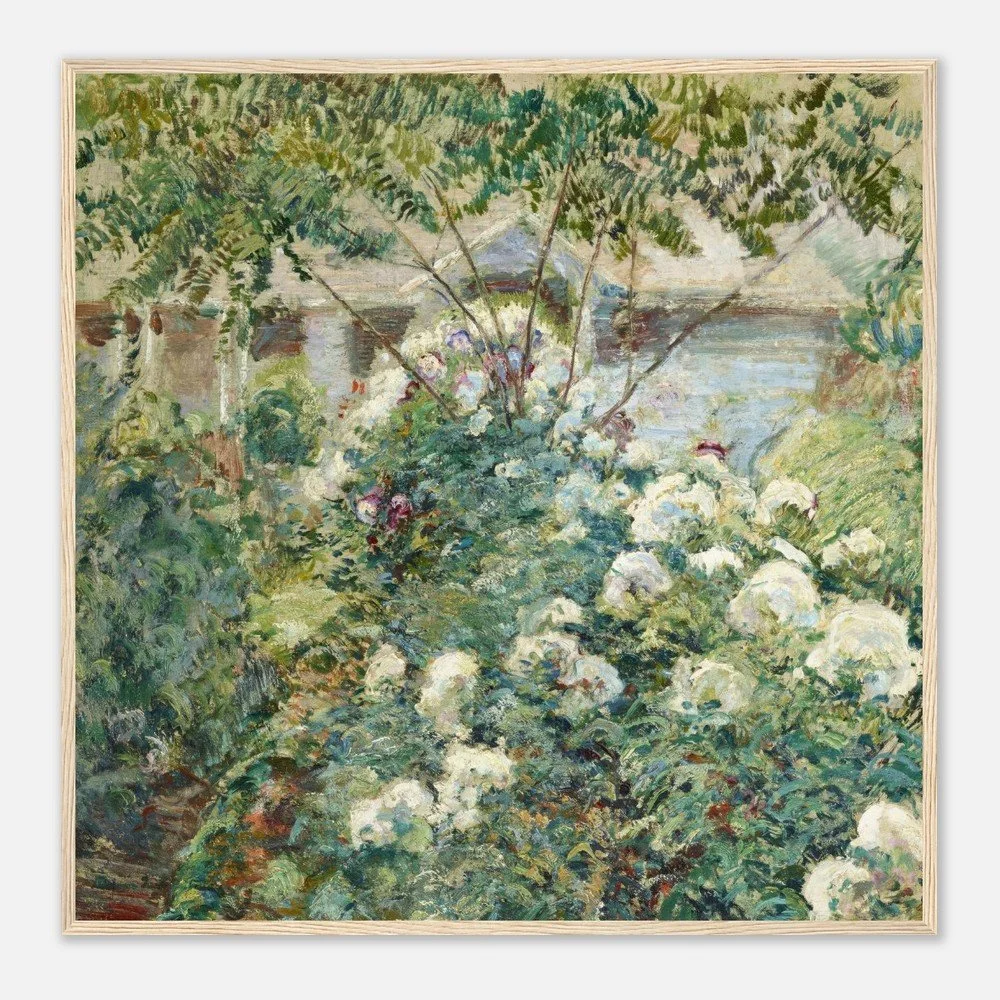
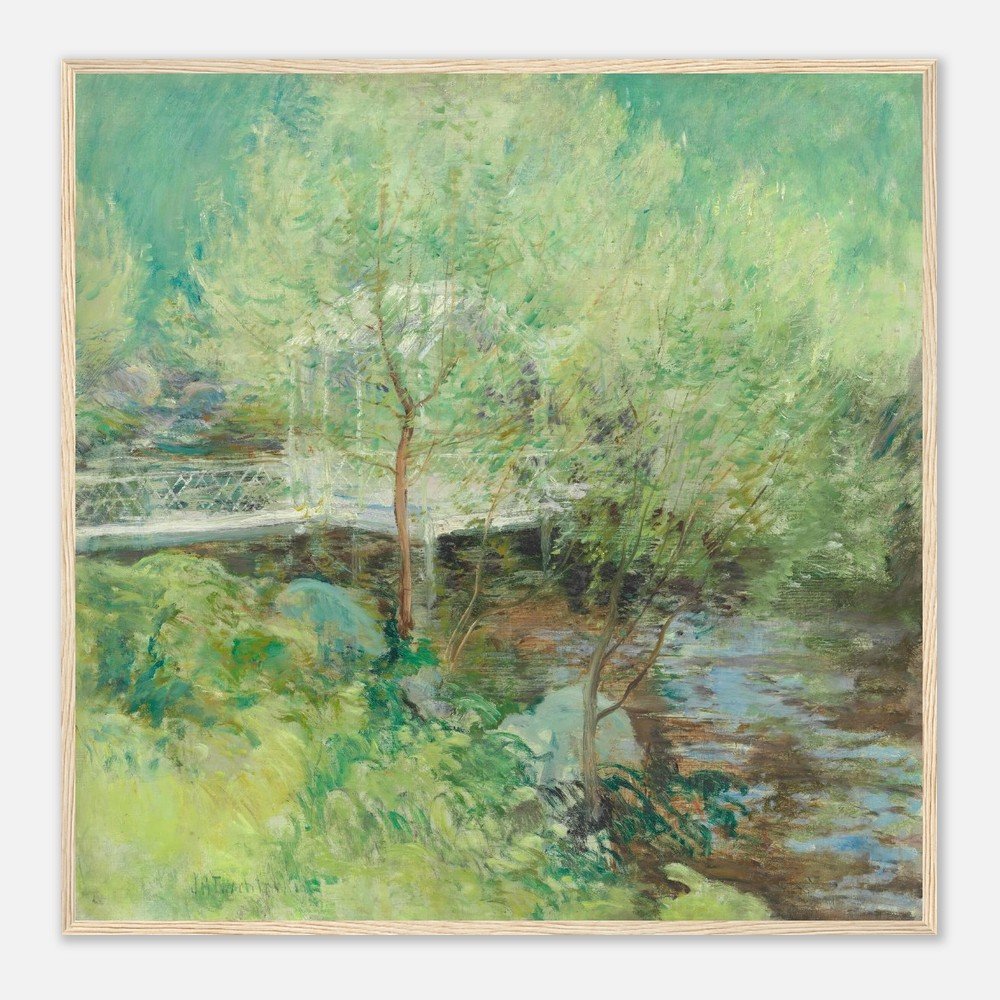
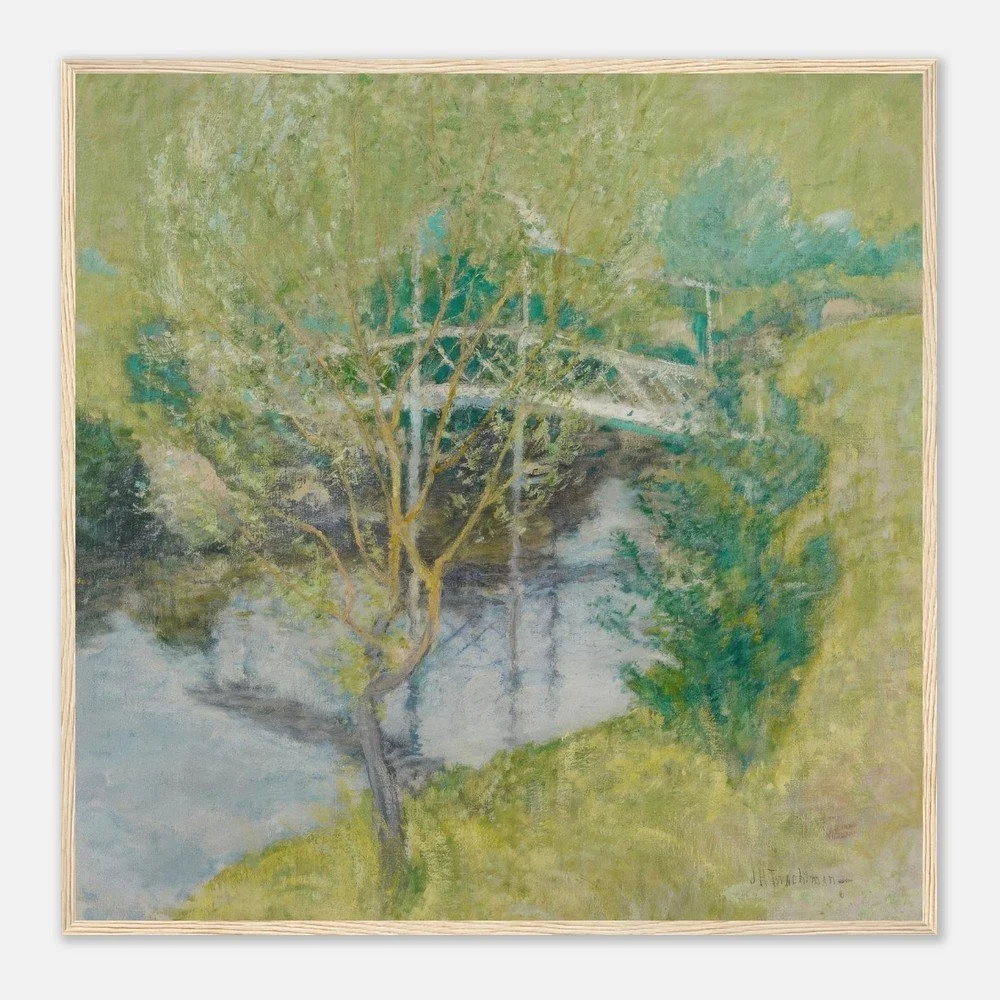
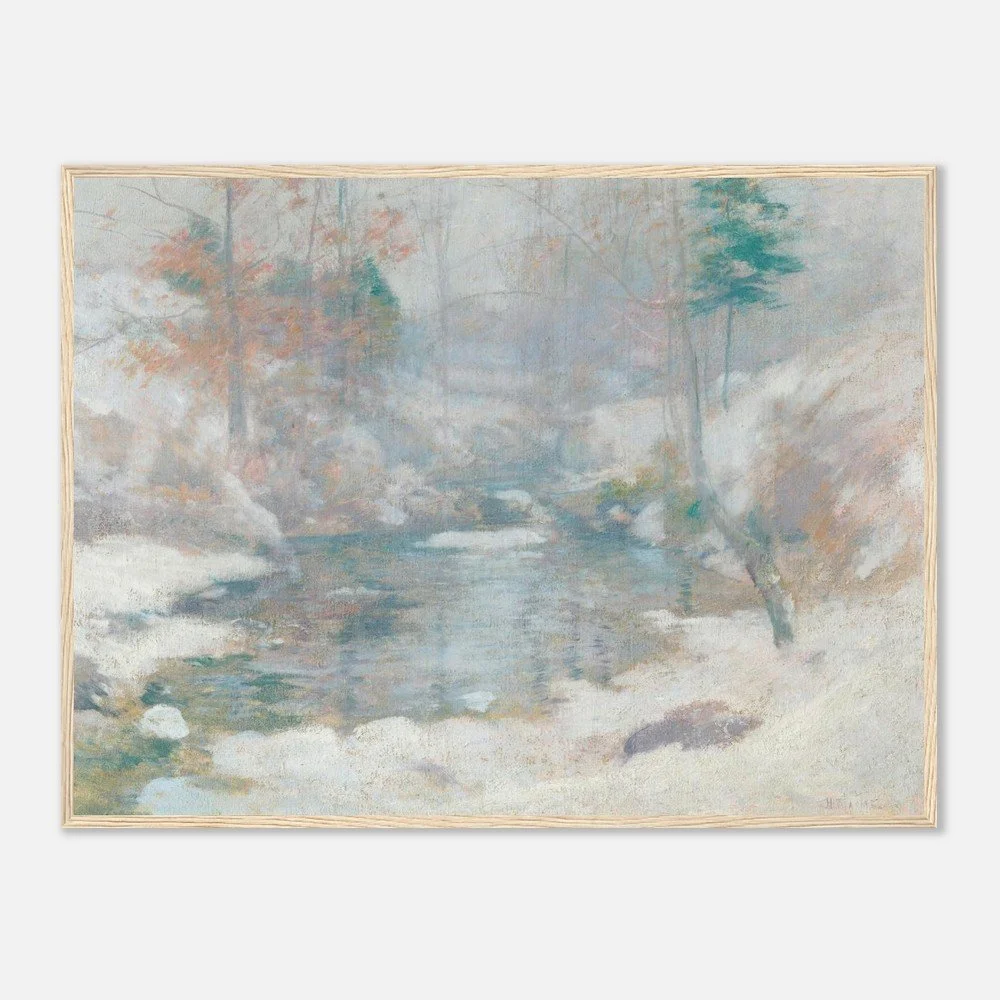
From 1890, he taught at the Art Students League of New York. In 1898, he joined The Ten American Painters, a group formed in opposition to academic constraints and dedicated to promoting new Impressionist approaches through regular exhibitions. At his Greenwich farm he returned again and again to nearby waterfalls, snow scenes, and gardens, creating luminous series that tracked the changing seasons. In his later years he also worked in Gloucester, producing brighter, more modern harbor views that anticipated key directions in twentieth-century American art.
Twachtman died in 1902 from a cerebral aneurysm at the age of forty-nine. Today his paintings are held by major institutions including the Metropolitan Museum of Art, the National Gallery of Art, and the Museum of Fine Arts Boston. His refined color language and lyrical brushwork continue to shape scholarship on American Impressionism and to influence painters drawn to atmosphere, restraint, and quiet emotional resonance.