
Wall Art for Interior Designers: A Practical Guide for Modern Projects (2026)
How Interior Designers Can Source Framed Wall Art Efficiently
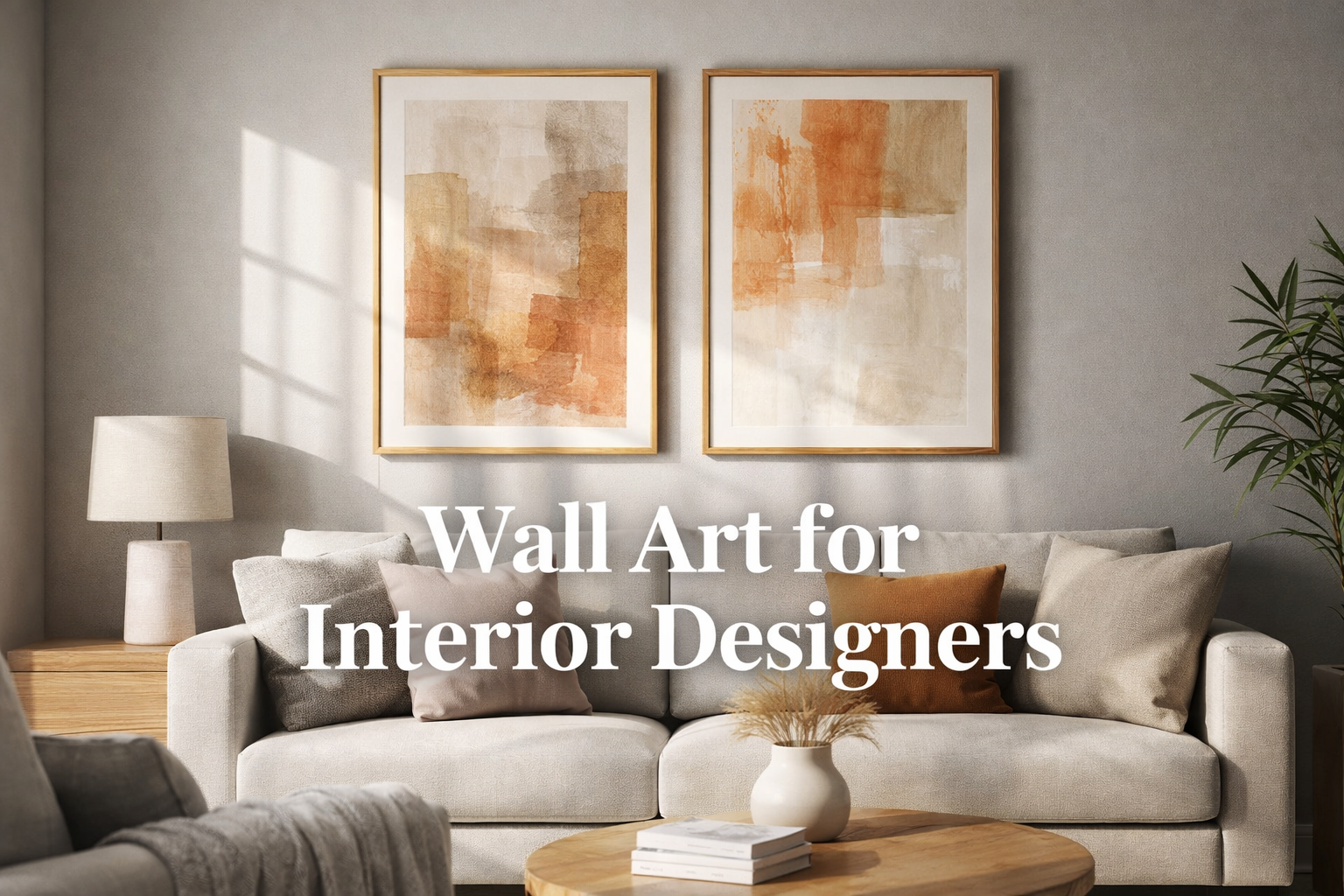
Wall art is often the final layer in an interior project — but it’s rarely a minor decision.
For interior designers managing residential builds, model homes, or multi-unit developments, artwork plays a critical role in shaping atmosphere, scale, and emotional impact. The challenge is not simply finding beautiful pieces. It’s sourcing artwork that is reliable, cohesive, and practical for installation timelines.
This guide breaks down how interior designers can approach wall art sourcing more strategically in 2026.
1. Why Wall Art Is Essential in Interior Design Projects
In modern interiors, artwork does three things:
• Anchors large open wall spaces
• Defines mood and color temperature
• Signals the design narrative of the home
In model homes and staged properties, art also influences perceived value. Large-scale, well-framed artwork can elevate a space instantly, helping buyers visualize a finished lifestyle rather than an empty shell.
Designers who standardize artwork sourcing often save time while increasing visual consistency across projects.
2. Choosing the Right Size & Scale for Each Space
Scale is where many projects fall short.
Living Rooms
Large horizontal pieces (40–60 inches wide) work best above sofas.
Center art at eye level (approximately 57–60 inches from floor to center).
Bedrooms
Warm neutral art creates calm focal points.
Botanical and abstract works often perform better than figurative pieces.
Entryways
Vertical formats create stronger first impressions.
Consider framed pieces with natural wood tones for warmth.
For multi-unit installations, repeatable size packages help simplify procurement and maintain cohesion across properties.
3. Curated vs. Mass-Market Art
Mass-market prints are convenient but often overused.
Curated collections — including artist collaborations and international contemporary works — help differentiate a project from standard retail aesthetics.
Interior designers increasingly look for:
• Artwork not widely available through big-box retailers
• Consistent framing options
• Collections that can scale across multiple units
Balancing uniqueness with reliability is key.
4. Framing Consistency for Cohesive Installations
Framing is as important as the artwork itself.
For modern interiors, popular framing options include:
• Natural oak frames for warm neutral spaces
• Walnut tones for contemporary homes
• Slim black aluminum for minimalist projects
Consistent frame profiles across living areas and bedrooms create visual harmony — especially in model homes or multi-family developments.
5. Wall Art for Multi-Unit & Model Home Projects
Design firms managing repeatable installs benefit from:
• Ready-to-install framed artwork
• U.S.-based production for faster turnaround
• Reliable replacement policies
• Trade pricing structures
For model homes, artwork should:
Feel warm and aspirational
Avoid polarizing themes
Complement broad buyer demographics
Neutral abstracts, botanical textures, and soft tonal palettes often perform best.
6. Working with Trade Partners
Many art suppliers now offer trade programs tailored for interior designers.
When evaluating partners, consider:
• Production location
• Turnaround times
• Damage replacement policies
• Frame quality consistency
• Bulk order support
For larger projects, establishing a repeatable artwork package can reduce sourcing time significantly.
Frequently Asked Questions
What size wall art works best in living rooms?
Large-scale horizontal art (40–60 inches wide) is typically ideal above sofas. Always ensure proportion to furniture width.
How do designers source art for multiple units?
Many create standardized artwork sets by space type — living room, bedroom, entryway — allowing for efficient repeat ordering.
What art style is safest for model homes?
Warm neutral abstracts and botanical prints tend to appeal to broad audiences without overwhelming the space.
Final Thoughts
Wall art is not just decoration — it’s a design tool.
For interior designers working on residential, multi-unit, and model home projects, strategic sourcing of framed artwork can streamline installation, elevate presentation, and create cohesive environments that resonate with buyers.
As the 2026 design cycle moves toward warmer neutrals, textured surfaces, and curated global influences, artwork will remain one of the most powerful finishing elements in modern interiors.
