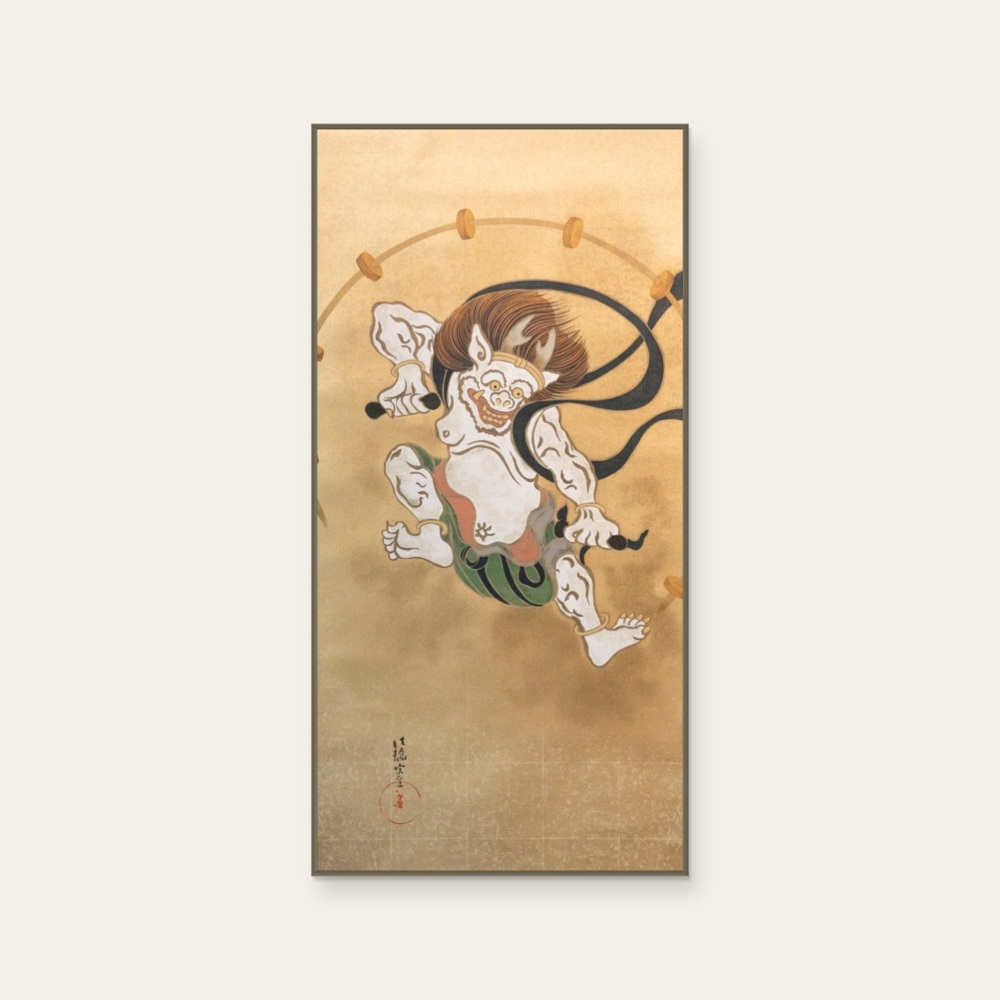
Rinpa | Tawaraya Sōtatsu- Thor (Long)
Rinpa School ↗From USD 56
- Color
- Cream & Brown
- Subject
- Nature & Landscapes、Japanese Art
- Orientation
- Portrait
THE LIGHTO EDIT
Thoughtful works by artists near and far, chosen for the spaces we call home.
EXPLORE THE COLLECTIONMeet the artists and find the piece that feels like yours.
LIGHTO TO MEET YOUFIND YOUR POINT OF VIEW
Landscapes, abstract forms, and everyday beauty.
THE COLLECTION
Browse the works from LIGHTO's authorized artists.
No artworks match these filters. Try another color, subject, or orientation.
THE PEOPLE BEHIND THE ART
From established names to new perspectives, discover the makers in the LIGHTO collection.
From USD 56
| Size | Artwork only | With framing | Framing + acrylic |
|---|---|---|---|
| 30×60 cm | USD 56 | USD 123 | USD 136 |
| 40×80 cm | USD 90 | USD 176 | USD 210 |
| 50×100 cm | USD 116 | USD 216 | USD 266 |
| 60×120 cm | USD 160 | USD 296 | USD 363 |
俵屋宗達(Tawaraya Sōtatsu,約1570年-約1640年/1643年)是日本安土桃山時代至江戶時代初期的著名畫師,與本阿彌光悅共同被視為琳派(Rinpa)的開創者。
代表作與國寶
• 《風神雷神圖屏風》:日本國寶,為其最負盛名的代表作,後來啟發了尾形光琳與酒井抱一的同名作品。
• 《鶴下繪和歌卷》:與本阿彌光悅合作,現藏於京都國立博物館。
• 《扇面散圖屏風》:描繪多角度散落扇面的獨特構圖作品。
什麼是琳派:
琳派(りんぱ),也稱做「光琳派」,是日本桃山時代後期興起活躍到近代的造形藝術流派。第一代本阿彌光悅(本阿弥光悦)、俵屋宗達奠定了其風格,第二代尾形光琳、乾山兄弟創作了大量作品將其發揚光大,第三代酒井抱一不但承續其風格,并將前人作品彙整公告於世,讓「琳派」得以一個系統流派為社會認識。相對於狩野派、圓山・四條派等其他江戶時代的流派,透過模寫直接向繪師學習畫技,琳派的傳承不問時間、場所、身分之差,是其他派未見的特色。琳派對歐洲的印象派、現代的日本畫和設計帶來相當大的影響,在日本美術史上占有舉足輕重的地位。
琳派中最具代表性的四位工藝畫師,按他們出現的時間順序排列,分別是俵屋宗達、尾形光琳、酒井抱一、神坂雪佳。這四位工藝畫師之間,彼此並不相識,甚至從未謀面。因為他們各自所生活的時代,正好相距大約百年。在琳派發展史上,他們分別代表了一百年也即一個世紀的時間。
Giclée print / Metallic photo paper
The Rinpa school, also known as the "Korin school", is a modern school of plastic arts that emerged in the late Momoyama period in Japan. The first generation of Ben-Ami Koetsu (Ben-Ami Koetsu) and Tawaraya Soda laid down its style. The second generation of Ogata Korin and the Qianshan brothers created a large number of works to promote it. The third generation of Sakai Hugoichi not only continued its style, but also announced the compilation of predecessors' works to the world, allowing the "Lin school" to be recognized as a systematic genre in society. Relative to other Edo era schools such as the Kano School, the Maruyama School, and the Shijo School, the Rinpoche School learned painting skills directly from painters through imitation. The inheritance of the Rinpoche School does not matter the time, place, or status, and is a characteristic that other schools have not seen. Lam's influence on European impressionism, modern Japanese painting, and design has played a pivotal role in the history of Japanese art.
The four most representative craft painters in the Lin school, arranged according to the chronological order of their appearance, are Tawaraya Sonta, Ogata Korin, Sakai Hakuichi, and Kamisaka Yukiya. The four craft painters did not know each other or even met each other. Because the times they lived in were exactly one hundred years apart. In the history of Linpai, they represented a hundred years, or a century, respectively.