THE LIGHTO EDIT
A little art
changes everything.
Thoughtful works by artists near and far, chosen for the spaces we call home.
EXPLORE THE COLLECTIONMeet the artists and find the piece that feels like yours.
LIGHTO TO MEET YOUFIND YOUR POINT OF VIEW
A place to begin.
Landscapes, abstract forms, and everyday beauty.
THE COLLECTION
Art to live with
Browse the works from LIGHTO's authorized artists.
No artworks match these filters. Try another color, subject, or orientation.
THE PEOPLE BEHIND THE ART
Meet the artists
From established names to new perspectives, discover the makers in the LIGHTO collection.
Sizes & prices
| Size | Artwork only | With framing | Framing + acrylic |
|---|---|---|---|
| 42×30 cm | USD 43 | USD 96 | USD 113 |
| 70×50 cm | USD 90 | USD 176 | USD 210 |
| 84×60 cm | USD 116 | USD 216 | USD 266 |
Product details
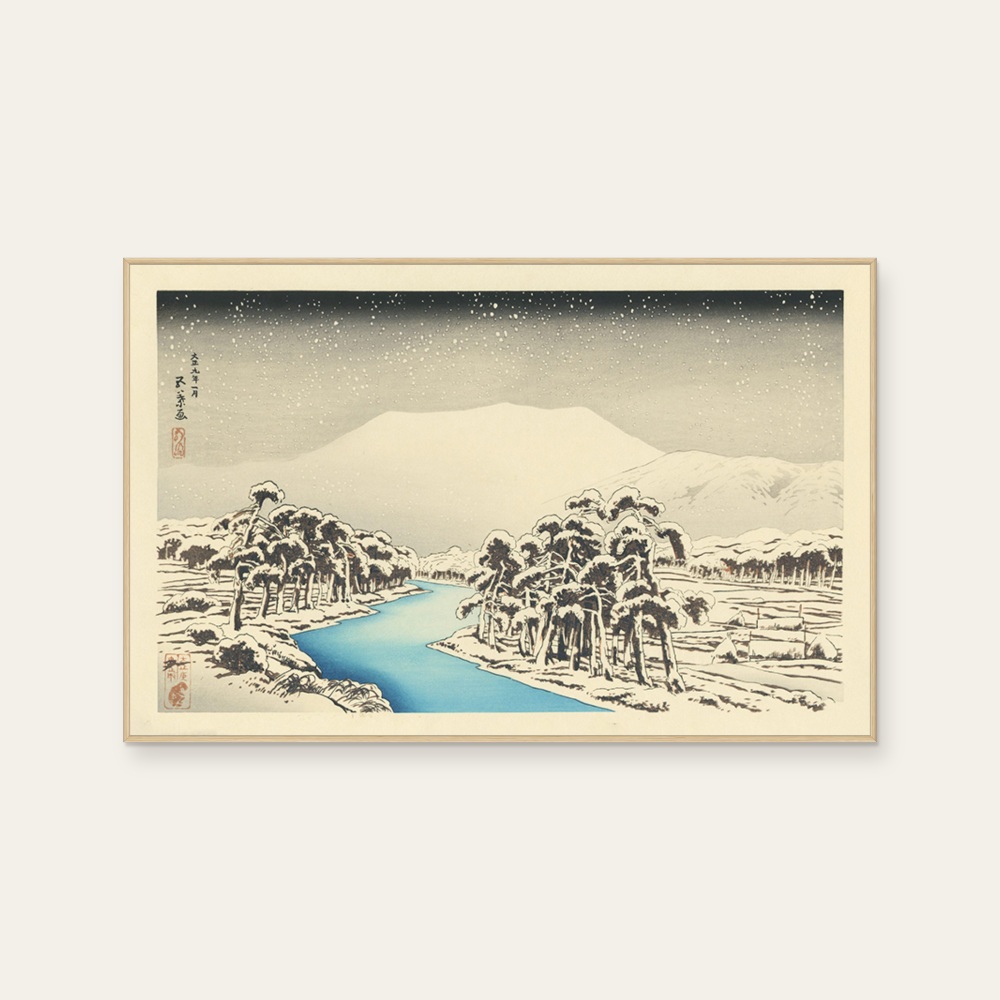
Hashiguchi Goyo
Discover Japanese woodblock prints:
Production process and division of responsibilities
1. Artist (eshi)
Responsible for drawing the original design.
Provides the overall composition and the design of the figures and landscape.
For example: Katsushika Hokusai, Utagawa Hiroshige, and Kawase Hasui.
2. Publisher (hanmoto)
The heart of the entire team, akin to a “producer + distributor.”
Funded and planned the work, determined its theme, and collaborated with the artist.
Hire carvers and printers, and coordinate the schedule and quality.
Responsible for sales and promotion, and for deciding the size of the edition.
For example: Shozaburo Watanabe of the shin-hanga movement.
3. Block carver (horishi)
Transfer the artist’s original drawing onto a woodblock for carving.
Each color requires a dedicated woodblock.
The technical demands are extremely high: precision down to the millimeter is required, or the overprinted colors will be misaligned.
4. Printer (surishi)
Woodblocks and pigments are used to print the image layer by layer onto washi paper.
Responsible for color gradation, blending, and light-and-shadow effects.
The level of technical skill directly affects the work’s final appearance.
Paper & medium
Giclée print / fine art etching paper
About the artist
Hashiguchi Goyo (1880–1921) was a central figure in Japan's early twentieth-century shin-hanga movement, admired for exquisite craftsmanship and an elegant sensibility. Born in Kagoshima, he studied Western painting at the Tokyo School of Fine Arts and was deeply influenced by the precision of European realism and academic techniques. His early career centered on illustration and design, but in 1915 he made a striking debut as a printmaker with Woman Bathing, published by Watanabe Shozaburo.
Goyō’s technique combines the elegance of Edo-period ukiyo-e with technical innovations in modern printmaking. Focusing on portraits of beautiful women, his works are distinguished by delicate lines, subtle shading, and a realist approach. Dissatisfied with the quality of the finished prints produced by commercial publishers, he began self-publishing in 1918, taking control of every stage of production to ensure the highest quality. His prints evoke a quiet, intimate atmosphere, capturing fleeting moments of tranquility and introspection.
Although Goyō Hashiguchi died of illness at the young age of 41, the works he left behind continue to demonstrate their artistic value. His contribution to the shin-hanga movement lay not only in defining its aesthetics, but also in establishing a new standard of quality for twentieth-century Japanese prints. His meticulously crafted prints remain an important legacy in the history of modern Japanese art.