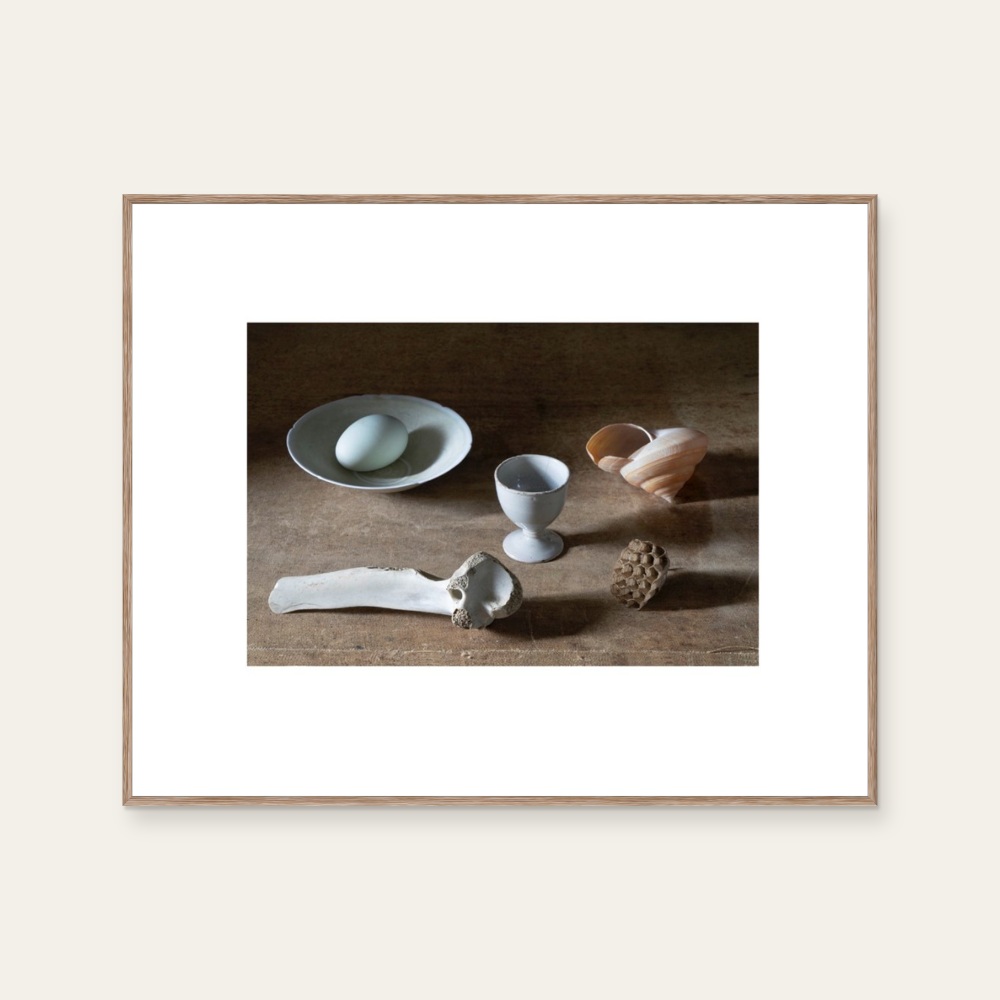
Tao is in all things - Divided in This Cup 4
Feng Junlan ↗Artwork medium
Artwork categories
- Subject
- Flowers & Still Life、Photography
- Orientation
- Landscape


THE LIGHTO EDIT
Thoughtful works by artists near and far, chosen for the spaces we call home.
EXPLORE THE COLLECTIONMeet the artists and find the piece that feels like yours.
LIGHTO TO MEET YOUFIND YOUR POINT OF VIEW
Landscapes, abstract forms, and everyday beauty.
THE COLLECTION
Browse the works from LIGHTO's authorized artists.
No artworks match these filters. Try another color, subject, or orientation.
THE PEOPLE BEHIND THE ART
From established names to new perspectives, discover the makers in the LIGHTO collection.
A smaller limited edition is also available:
Image size: 30*45 cm
Paper size: 50*65 cm
Edition of 12
Artwork only: NT$40,000 (unframed)
.
“In the beginning was the Word, and the Word was with God, and the Word was God. ... All things were made through Him; without Him, nothing that was made came into being. In Him was life, and that life was the light of humankind.” — John 1:1–4
“All is one, and each is within the other.” — Pascal
According to the revelation in the Gospel of John, the Word through which God created all things shares His divine nature and exists alongside Him. The self-existent, eternal God is spirit, a spiritual reality and a personal being with independent thought, will and emotion; so, too, is the Word. If all things without exception were designed and created by God, the Word, then the universe and the whole of nature, including humanity and all forms of life, did not simply arise of themselves. They originate in the creative work of God, the Word, who alone exists freely and of Himself. This also means that the natural universe is more than a purely material or physical phenomenon: it contains the spirituality projected by the Word, just as human-made objects contain the spirituality of their makers.
This is what I seek to express and share through this series, “The Word in All Things.” In these still-life photographs, with their simple ritual quality and Puritan aesthetic, I arrange a fallen leaf, a magnolia blossom, a handful of cotton-tree flowers, a piece of bone or a shaft of sunlight; or a loaf of bread, a glass, a bottle of water or a candlestick. These become objects of contemplation and meditation through which we may perceive the Word from which all things originate. I hope to awaken our respect and care for even the smallest fragment of nature, as well as for human-made objects. We may then come to understand Pascal’s words, “All is one, and each is within the other”: the unity of all things, which come from the Word and should return to the Word.
Feng Junlan is a photographic artist whose full-time vocation is that of a Christian clergyman. In his own words, his art is more than a small interest alongside serving God: it is a contemplation of the faith for which he lives and would die.
Feng’s work goes beyond objective documentation. Grounded in Christian theology, it presents his distinctive artistic vision through the form of a drama contained in a single image. From this perspective, the people portrayed in his “Icons of Dust” series are neither accidents produced by a succession of coincidences in the vast universe, nor naked apes, subjects of desire or cultural animals. They are a union of matter and the divine: finite beings made anxious by their awareness of eternity.
His other photographic series include “The Word in All Things (Still Life),” “Members of One Another,” “Grass and Chaff,” “Cursive Script,” “The Word in Tiles and Bricks,” “Bone of My Bones” and “A Stage Scene.” They reflect his Christian perspective on time, space, objects, nature and human history.
In 2011, 2012 and 2013, he received the bronze, gold and silver medals respectively in the photography category of Taiwan’s National Art Exhibition (no gold medal was awarded in the year of the silver award). In 2016, Locus Publishing released his collection of photographs and essays, “Light upon Dust”; that year, he also received the top prize in the inaugural Ruan Yizhong Photography and Humanities Award. In 2024, Qingcaotang published his photobook “Icons of Dust.” His work has been exhibited in Taiwan, China, France, the United States, South Korea, Japan and the United Kingdom, listed in chronological order.