

THE LIGHTO EDIT
A little art
changes everything.
Thoughtful works by artists near and far, chosen for the spaces we call home.
EXPLORE THE COLLECTIONMeet the artists and find the piece that feels like yours.
LIGHTO TO MEET YOUFIND YOUR POINT OF VIEW
A place to begin.
Landscapes, abstract forms, and everyday beauty.
THE COLLECTION
Art to live with
Browse the works from LIGHTO's authorized artists.
No artworks match these filters. Try another color, subject, or orientation.
THE PEOPLE BEHIND THE ART
Meet the artists
From established names to new perspectives, discover the makers in the LIGHTO collection.
Sizes & prices
| Size | Artwork only | With framing | Framing + acrylic |
|---|---|---|---|
| 30×43 cm | USD 43 | USD 96 | USD 113 |
| 49×70 cm | USD 93 | USD 173 | USD 206 |
| 60×86 cm | USD 130 | USD 243 | USD 280 |
Product details
* Photographic paper only (without framing): ships in 3–5 business days.
*If you choose mounting and framing: the process is time-consuming and labor-intensive, so please allow 2–3 weeks for your order and be patient.
Artwork dimensions: Small size: 30 x 43 cm Medium: 49 x 70 cm Large size: 60 x 86 cm * Please message us about other sizes. Giclée on etching art paper Hanging method:
Every aluminum frame has a hanging wire on the back. To hang it, you can attach a 3M damage-free hook to the wall (please purchase a version rated for at least 5 kg for safety).
* The original is a woodcut, which gives the marks a rougher texture.
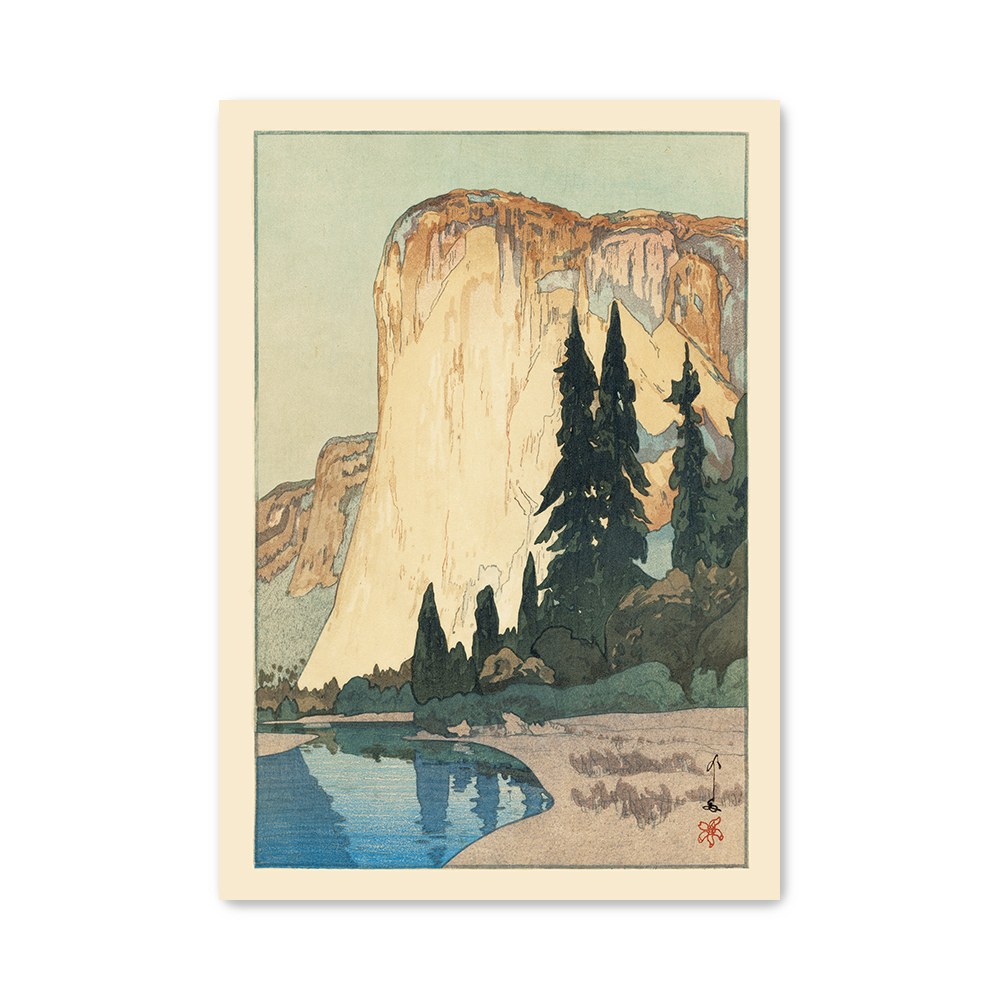
Hiroshi Yoshida (September 19, 1876–April 5, 1950) was one of Japan’s most celebrated modern woodblock print artists and a central figure in the Shin-hanga Movement. He is known for combining Western realist techniques with traditional Japanese ukiyo-e woodblock printing. His work consists primarily of landscapes, with subjects including famous sites in Japan, European and American scenery, and the South Sea Islands.
Life and Background Place of birth: Kurume, Fukuoka Prefecture, Japan Original name: Hiroshi Yoshida
Education: As a young man, he went to Tokyo to study Western-style painting under renowned painters including Seihō Takeuchi. His early work consisted mainly of watercolors and oil paintings.
Travels in Europe and America: In the early 1900s, he traveled to the United States and Europe to exhibit his oil paintings and watercolors, achieving great success in Boston, Chicago, New York, and elsewhere, and thereby gaining a broad international perspective.
Turn to woodblock prints: In the 1920s, encouraged by the Shin-hanga movement, he began making woodblock prints, combining traditional ukiyo-e techniques with Western approaches to light and shadow to develop a distinctive artistic style.
Artistic style and characteristics
A fusion of Eastern and Western techniques. Influenced by Western Impressionism and Realism, Hiroshi Yoshida placed great importance on light and shadow, atmosphere, and natural detail. In his compositions and treatment of color, he used traditional Japanese woodblock-printing techniques while incorporating the layered qualities of oil painting and watercolor.
A fusion of Eastern and Western techniques Influenced by Western Impressionism and Realism, Hiroshi Yoshida emphasized light and shadow, atmosphere, and natural detail.
In his handling of composition and color, he used traditional Japanese woodblock-printing techniques while incorporating the layered qualities of oil painting and watercolor.
Exquisite printmaking craftsmanship: Yoshida was meticulous about print production, often personally supervising the carvers and printers to ensure the quality of his works. He also used multiple color-layering techniques to give the same print different times of day, seasons, and atmospheres.
Exquisite printmaking craftsmanship Yoshida was highly exacting in his printmaking, often personally supervising the carvers and printers to ensure the quality of his work.
He also used various color-overprinting techniques to evoke different times, seasons, and moods within a single print.
A landscape painter with an international outlook. His works depict not only famous sites in Japan but also the Grand Canyon in the United States, the Swiss Alps, the Taj Mahal in India, and other places. As a result, his woodblock prints were popular not only in Japan at the time but were also highly collectible in European and American markets.
A landscape painter with an international outlook
His works depict not only famous sites in Japan but also the Grand Canyon in the United States, the Swiss Alps, and the Taj Mahal in India, among other places.
As a result, his woodblock prints were not only popular in Japan at the time but also highly collectible in European and American markets.
Discover Japanese woodblock prints: Production process and division of responsibilities
1. Artist (eshi) Responsible for drawing the original design. Provides the overall composition and the design of the figures and landscape.
For example: Katsushika Hokusai, Utagawa Hiroshige, and Kawase Hasui. 2. Publisher (hanmoto) The heart of the entire team, akin to a “producer + distributor.”
Funded and planned the work, determined its theme, and collaborated with the artist.
Hire carvers and printers, and coordinate the schedule and quality. Responsible for sales and promotion, and for deciding the size of the edition.
For example: Shozaburo Watanabe of the shin-hanga movement. 3. Block carver (horishi) Transfer the artist’s original drawing onto a woodblock for carving. Each color requires a dedicated woodblock.
The technical demands are extremely high: precision down to the millimeter is required, or the overprinted colors will be misaligned.
4. Printer (surishi) Woodblocks and pigments are used to print the image layer by layer onto washi paper.
Responsible for color gradation, blending, and light-and-shadow effects. The level of technical skill directly affects the work’s final appearance.
Paper & medium
Yoshida was meticulous about printmaking, often supervising the carvers and printers to ensure quality. By layering colors in different ways, he could convey different times of day, seasons and moods within the same composition.
Yoshida was meticulous about printmaking, often supervising the carvers and printers himself to ensure the quality of his work.
About the artist
Hiroshi Yoshida (September 19, 1876–April 5, 1950) was one of Japan’s most celebrated modern woodblock print artists and a central figure in the Shin-hanga Movement. He is known for combining Western realist techniques with traditional Japanese ukiyo-e woodblock printing. His work consists primarily of landscapes, with subjects including famous sites in Japan, European and American scenery, and the South Sea Islands.
Life and Background
Place of birth: Kurume, Fukuoka Prefecture, Japan
Original name: Hiroshi Yoshida
Education: As a young man, he went to Tokyo to study Western-style painting under renowned painters including Seihō Takeuchi. His early work consisted mainly of watercolors and oil paintings.
Travels in Europe and America: In the early 1900s, he traveled to the United States and Europe to exhibit his oil paintings and watercolors, achieving great success in Boston, Chicago, New York, and elsewhere, and thereby gaining a broad international perspective.
Turn to woodblock prints: In the 1920s, encouraged by the Shin-hanga movement, he began making woodblock prints, combining traditional ukiyo-e techniques with Western approaches to light and shadow to develop a distinctive artistic style.
Artistic style and characteristics
A fusion of Eastern and Western techniques. Influenced by Western Impressionism and Realism, Hiroshi Yoshida placed great importance on light and shadow, atmosphere, and natural detail. In his compositions and treatment of color, he used traditional Japanese woodblock-printing techniques while incorporating the layered qualities of oil painting and watercolor.
A fusion of Eastern and Western techniques
Influenced by Western Impressionism and Realism, Hiroshi Yoshida emphasized light and shadow, atmosphere, and natural detail.
In his handling of composition and color, he used traditional Japanese woodblock-printing techniques while incorporating the layered qualities of oil painting and watercolor.
Exquisite printmaking craftsmanship: Yoshida was meticulous about print production, often personally supervising the carvers and printers to ensure the quality of his works. He also used multiple color-layering techniques to give the same print different times of day, seasons, and atmospheres.
Exquisite printmaking craftsmanship
Yoshida was highly exacting in his printmaking, often personally supervising the carvers and printers to ensure the quality of his work.
He also used various color-overprinting techniques to evoke different times, seasons, and moods within a single print.
A landscape painter with an international outlook. His works depict not only famous sites in Japan but also the Grand Canyon in the United States, the Swiss Alps, the Taj Mahal in India, and other places. As a result, his woodblock prints were popular not only in Japan at the time but were also highly collectible in European and American markets.
A landscape painter with an international outlook
His works depict not only famous sites in Japan but also the Grand Canyon in the United States, the Swiss Alps, and the Taj Mahal in India, among other places.
As a result, his woodblock prints were not only popular in Japan at the time but also highly collectible in European and American markets.