

THE LIGHTO EDIT
A little art
changes everything.
Thoughtful works by artists near and far, chosen for the spaces we call home.
EXPLORE THE COLLECTIONMeet the artists and find the piece that feels like yours.
LIGHTO TO MEET YOUFIND YOUR POINT OF VIEW
A place to begin.
Landscapes, abstract forms, and everyday beauty.
THE COLLECTION
Art to live with
Browse the works from LIGHTO's authorized artists.
No artworks match these filters. Try another color, subject, or orientation.
THE PEOPLE BEHIND THE ART
Meet the artists
From established names to new perspectives, discover the makers in the LIGHTO collection.
Sizes & prices
| Size | Artwork only | With framing | Framing + acrylic |
|---|---|---|---|
| 59.4×84.1 cm | — | USD 216 | USD 243 |
Product details
Artist: Yoko Ono
Yoko Ono (born 1933) is a Japanese-American artist regarded as a legendary figure and one of the most influential artists of our time. She works across a range of media, including visual art, poetry, film, music, installation, performance, and events. Her work centers on ideas rather than materials and is known for its simple yet original expression.
Many of Ono's ideas are poetic, surreal and utopian; others are practical and achievable. Her work combines subtle humor with strong social criticism. Some ideas take physical form, while others remain immaterial. Many works are based on instructions—spoken or written requests addressed to the audience—giving viewers an active role in the creative process.
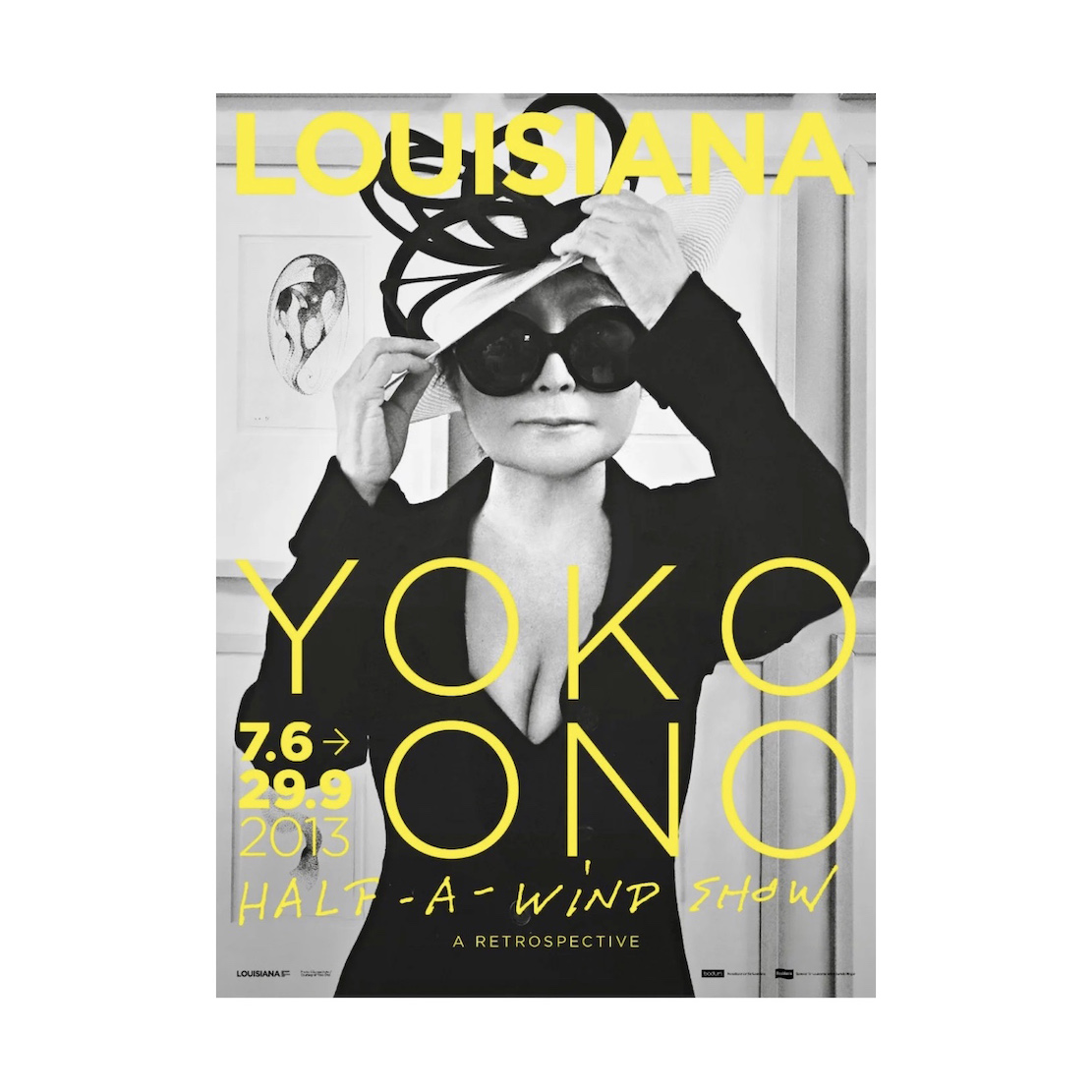
In 2013, the Louisiana Museum of Modern Art held a retrospective curated by Yoko Ono, showcasing the diversity of media and disciplines in her artistic practice. Titled “Yoko Ono – half a wind show – a Retrospective,” the exhibition marked Ono’s 80th birthday.
Yoko Ono expresses herself with the same simplicity and originality in painting, poetry, film, music, installation art, performance, and events. The principal element of her work is the idea rather than the material. Many of her ideas are poetic, strange, and anarchic; others can be put into practice. All reflect her subtle sense of humor and clear stance of social criticism.
Some ideas take the form of objects, while others remain on an intangible plane. Many of the works are based on Yoko Ono's instructions—spoken or written appeals to the audience. In this way, the artist gives the audience an active role in the creative process.
Artwork title: HALF A WIND SHOW
Poster size: 59.4x84.1cm
Original poster from an art museum
Paper & medium
Original poster; size and framing options are listed above.
About the artist
Yoko Ono (born 1933) is a Japanese-American artist regarded as a legendary figure and one of the most influential artists of our time. She works across a range of media, including visual art, poetry, film, music, installation, performance, and events. Her work centers on ideas rather than materials and is known for its simple yet original expression.
Many of Ono's ideas are poetic, surreal and utopian; others are practical and achievable. Her work combines subtle humor with strong social criticism. Some ideas take physical form, while others remain immaterial. Many works are based on instructions—spoken or written requests addressed to the audience—giving viewers an active role in the creative process.
In 2013, the Louisiana Museum of Modern Art held a retrospective curated by Yoko Ono, showcasing the diversity of media and disciplines in her artistic practice. Titled “Yoko Ono – half a wind show – a Retrospective,” the exhibition marked Ono’s 80th birthday.
Yoko Ono expresses herself with the same simplicity and originality in painting, poetry, film, music, installation art, performance, and events. The principal element of her work is the idea rather than the material. Many of her ideas are poetic, strange, and anarchic; others can be put into practice. All reflect her subtle sense of humor and clear stance of social criticism.
Some ideas take the form of objects, while others remain on an intangible plane. Many of the works are based on Yoko Ono's instructions—spoken or written appeals to the audience. In this way, the artist gives the audience an active role in the creative process.