

THE LIGHTO EDIT
A little art
changes everything.
Thoughtful works by artists near and far, chosen for the spaces we call home.
EXPLORE THE COLLECTIONMeet the artists and find the piece that feels like yours.
LIGHTO TO MEET YOUFIND YOUR POINT OF VIEW
A place to begin.
Landscapes, abstract forms, and everyday beauty.
THE COLLECTION
Art to live with
Browse the works from LIGHTO's authorized artists.
No artworks match these filters. Try another color, subject, or orientation.
THE PEOPLE BEHIND THE ART
Meet the artists
From established names to new perspectives, discover the makers in the LIGHTO collection.
Sizes & prices
| Size | Artwork only | With framing | Framing + acrylic |
|---|---|---|---|
| 80×60 cm | — | USD 190 | USD 216 |
Product details
Printing paper
Artwork dimensions: 60 x 80 cm ※ Original poster
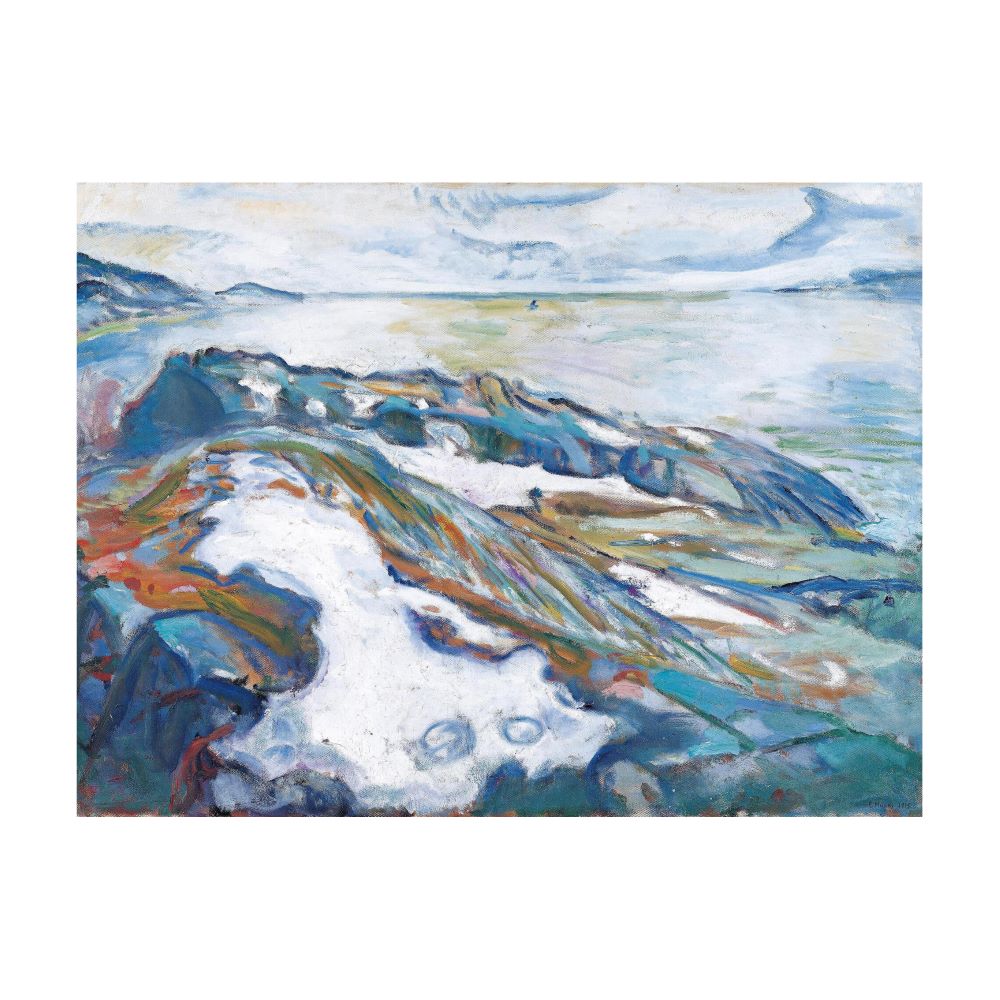
Title: Winter landschaft
Artwork details / Year: 1915. Medium: oil painting. Original dimensions: 100 × 150 cm.
Munch explored winter landscapes particularly in the town of Kragerø, where he returned to Norway in 1909 after a period of hospitalization in Copenhagen following a mental breakdown. The rugged, barren fjord landscape was entirely different from the “landscapes of the soul” he made around the turn of the century. Broad expanses of snow contrast with bands of rock or grass, creating rich variations in color. The palette is bright, while heavy brushstrokes shape the landscape’s intangible elements into an ever-changing whole in which the different colored forms merge.
In Paris, Berlin, and elsewhere, Munch’s nervous Expressionist style and psychologically compelling subjects were largely rejected by broad audiences, but they aroused great enthusiasm among open-minded young artists. The Norwegian painter ultimately became a pioneer of Expressionism and secured his place in history.
After a nervous breakdown in 1908, Munch returned to his hometown and began exploring landscape painting more deeply. This winter landscape in white, blue, and green is somewhat reminiscent of Ferdinand Hodler’s style, and it was not unique among his works of this period.
But unlike paintings such as “Winter in Kragerø” (Munch Museum Oslo), here Munch already shows the transition from winter to spring. Along the rugged coastline, a patch of snow has retreated into the shade, allowing the green of new vegetation to spread. This winter landscape might therefore also be called a “landscape of the soul”; it bears witness to renewed confidence and vitality.
Excerpted from: R. & H. Batliner Art Foundation (ed.), Rudolf Koella (concept and editing) / Felix Billeter (research assistant), Hidden Masterpieces (catalogue of the R & H Batliner Art Foundation collection, Vaduz 2005), Vienna, 2005, p. 42, no. 149.
About the artist / Edvard Munch
Edvard Munch (December 12, 1863–January 23, 1944) was a Norwegian painter. His best-known work, The Scream, is one of the iconic images of contemporary art.
His childhood was overshadowed by illness, the pain of losing family members, and fear of inheriting his family's mental illness. While studying at the Royal School of Art and Design in Kristiania (now Oslo), Munch began living a bohemian life under the influence of the nihilist Hans Jæger, who urged him to depict his emotions and psychological state. This gave rise to his distinctive style.
Travel brought new influences and avenues for his work. In Paris, he learned a great deal from Paul Gauguin, Vincent van Gogh, and Henri de Toulouse-Lautrec, especially from their use of color. In Berlin, he met the Swedish playwright August Strindberg and created his major work The Frieze of Life, depicting a series of themes involving profound emotions, such as love, anxiety, jealousy, and betrayal.
As his fame and wealth grew, he remained emotionally insecure. He briefly considered marriage but could not commit. A breakdown in 1908 forced him to give up heavy drinking. He became increasingly accepted in Christiania, and his work began to gain a foothold in local museums. He spent his later years working quietly and privately. Although his work was banned in Nazi Germany, most of it survived World War II, leaving a legacy behind.
Paper & medium
Original poster; size and framing options are listed above.
About the artist
Edvard Munch (December 12, 1863–January 23, 1944) was a Norwegian painter. His best-known work, The Scream, is one of the iconic images of contemporary art.
His childhood was overshadowed by illness, the pain of losing family members, and fear of inheriting his family's mental illness. While studying at the Royal School of Art and Design in Kristiania (now Oslo), Munch began living a bohemian life under the influence of the nihilist Hans Jæger, who urged him to depict his emotions and psychological state. This gave rise to his distinctive style.
Travel brought new influences and avenues for his work. In Paris, he learned a great deal from Paul Gauguin, Vincent van Gogh, and Henri de Toulouse-Lautrec, especially from their use of color. In Berlin, he met the Swedish playwright August Strindberg and created his major work The Frieze of Life, depicting a series of themes involving profound emotions, such as love, anxiety, jealousy, and betrayal.
As his fame and wealth grew, he remained emotionally insecure. He briefly considered marriage but could not commit. A breakdown in 1908 forced him to give up heavy drinking. He became increasingly accepted in Christiania, and his work began to gain a foothold in local museums. He spent his later years working quietly and privately. Although his work was banned in Nazi Germany, most of it survived World War II, leaving a legacy behind.