

THE LIGHTO EDIT
A little art
changes everything.
Thoughtful works by artists near and far, chosen for the spaces we call home.
EXPLORE THE COLLECTIONMeet the artists and find the piece that feels like yours.
LIGHTO TO MEET YOUFIND YOUR POINT OF VIEW
A place to begin.
Landscapes, abstract forms, and everyday beauty.
THE COLLECTION
Art to live with
Browse the works from LIGHTO's authorized artists.
No artworks match these filters. Try another color, subject, or orientation.
THE PEOPLE BEHIND THE ART
Meet the artists
From established names to new perspectives, discover the makers in the LIGHTO collection.
Sizes & prices
USD 36
Product details
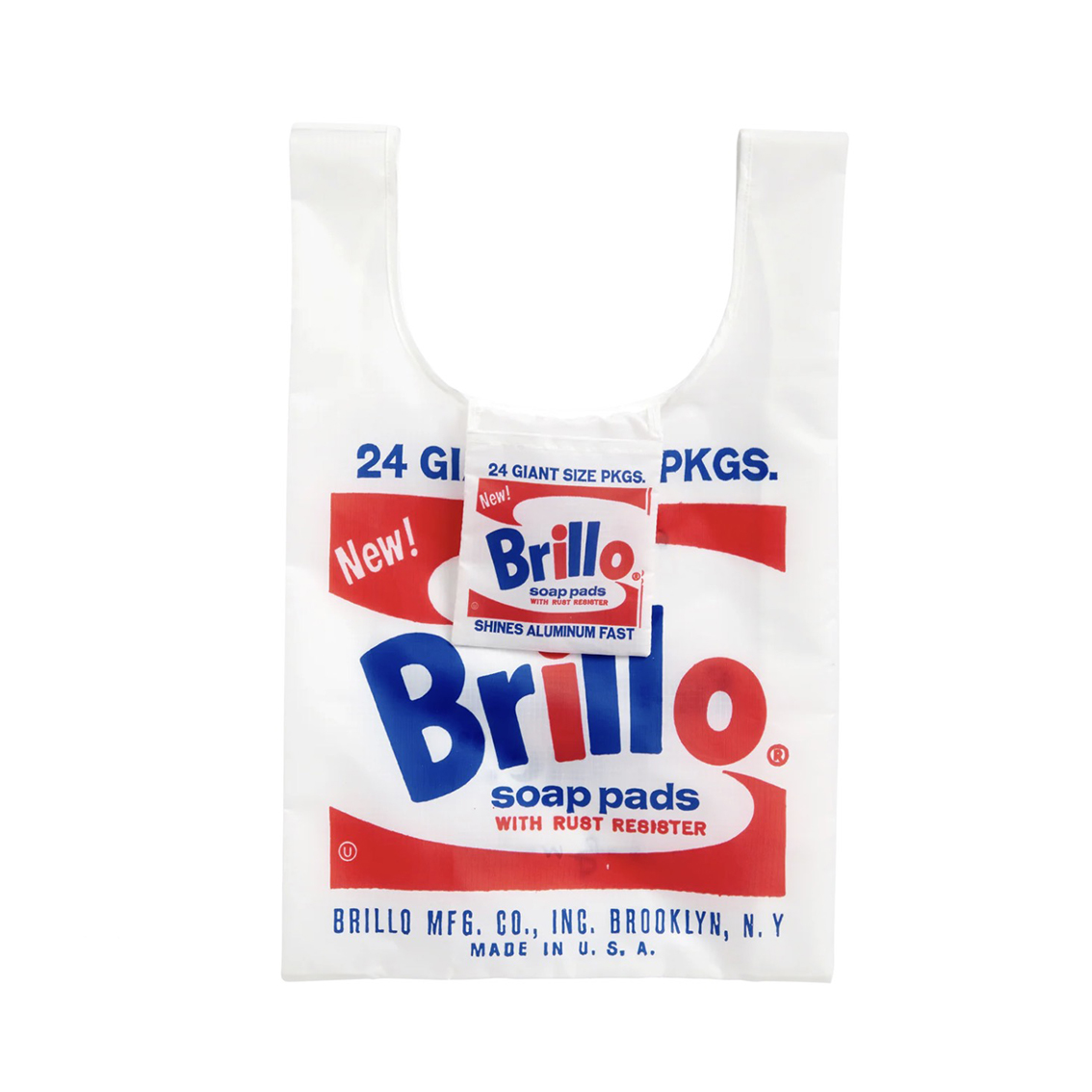
A shopping bag/tote inspired by the packaging of Brillo steel wool cleaning pads, with a style and visual language that clearly pays homage to (or is licensed from) Pop Art icon Andy Warhol’s Brillo Box.
Dimensions when stored: 16x13x1.3 cm
Dimensions when unfolded for storage: 36* 56 cm
About the artist / Andy Warhol
Andy Warhol was an American artist, printmaker, and cinematographer, and one of the pioneers of the visual art movement Pop Art. He was born in Pittsburgh, Pennsylvania, where the Andy Warhol Museum commemorates his work and life. After achieving great success as a commercial illustrator, Warhol worked as a painter, avant-garde filmmaker, archivist, and writer, among other roles. He also coined the widely known concept of “15 minutes of fame.”
Silkscreen printing is a hallmark of Andy Warhol's work, allowing images to be repeated in large quantities at low cost. Like the Pop Art he championed, his work reflects the impact of the consumer revolution while embracing everyday life and an egalitarian outlook. Familiar goods such as Coca-Cola and Campbell's soup cans became his subjects. He observed that a great feature of America was that the richest and poorest people could enjoy essentially the same things: one could watch television and drink Coca-Cola just as the president or Liz Taylor did. A Coke was a Coke; there was no better, more expensive version. If money could not buy a better Coca-Cola, why could Coca-Cola not become art?
In the 1950s, after graduating in commercial design, Andy Warhol moved to New York with the ambition of bringing commerce into art—and succeeded. He achieved great success as a commercial illustrator and went on to pioneer Pop Art, becoming one of the twentieth century's most influential artists. Moving in high society, he enjoyed a popularity comparable to today's influencers. His famous prediction, 'In the future, everyone will be world-famous for fifteen minutes,' suggested that sufficient exposure could turn anyone into a star. It remarkably anticipated today's world of social media.
Paper & medium
Andy Warhol was an American artist, printmaker and filmmaker, and a leading figure in Pop Art. Born in Pittsburgh, Pennsylvania, he is commemorated there by the Andy Warhol Museum. After achieving success as a commercial illustrator, he worked as a painter, experimental filmmaker, archivist and writer. He also popularized the idea of fifteen minutes of fame.
Screen printing was a hallmark of Andy Warhol's practice, allowing images to be reproduced in large numbers at an accessible price. His Pop Art reflected the impact of consumer culture while embracing everyday life and equality. Familiar products such as Coca-Cola bottles and Campbell's soup cans became his subjects. Warhol observed that rich and poor could enjoy the same Coca-Cola: a higher price could not buy a better one. This everyday equality informed his view that even a soft drink could become art.
About the artist
Andy Warhol was an American artist, printmaker, and cinematographer, and one of the pioneers of the visual art movement Pop Art. He was born in Pittsburgh, Pennsylvania, where the Andy Warhol Museum commemorates his work and life. After achieving great success as a commercial illustrator, Warhol worked as a painter, avant-garde filmmaker, archivist, and writer, among other roles. He also coined the widely known concept of “15 minutes of fame.”
Silkscreen printing is a hallmark of Andy Warhol's work, allowing images to be repeated in large quantities at low cost. Like the Pop Art he championed, his work reflects the impact of the consumer revolution while embracing everyday life and an egalitarian outlook. Familiar goods such as Coca-Cola and Campbell's soup cans became his subjects. He observed that a great feature of America was that the richest and poorest people could enjoy essentially the same things: one could watch television and drink Coca-Cola just as the president or Liz Taylor did. A Coke was a Coke; there was no better, more expensive version. If money could not buy a better Coca-Cola, why could Coca-Cola not become art?
In the 1950s, after graduating in commercial design, Andy Warhol moved to New York with the ambition of bringing commerce into art—and succeeded. He achieved great success as a commercial illustrator and went on to pioneer Pop Art, becoming one of the twentieth century's most influential artists. Moving in high society, he enjoyed a popularity comparable to today's influencers. His famous prediction, 'In the future, everyone will be world-famous for fifteen minutes,' suggested that sufficient exposure could turn anyone into a star. It remarkably anticipated today's world of social media.