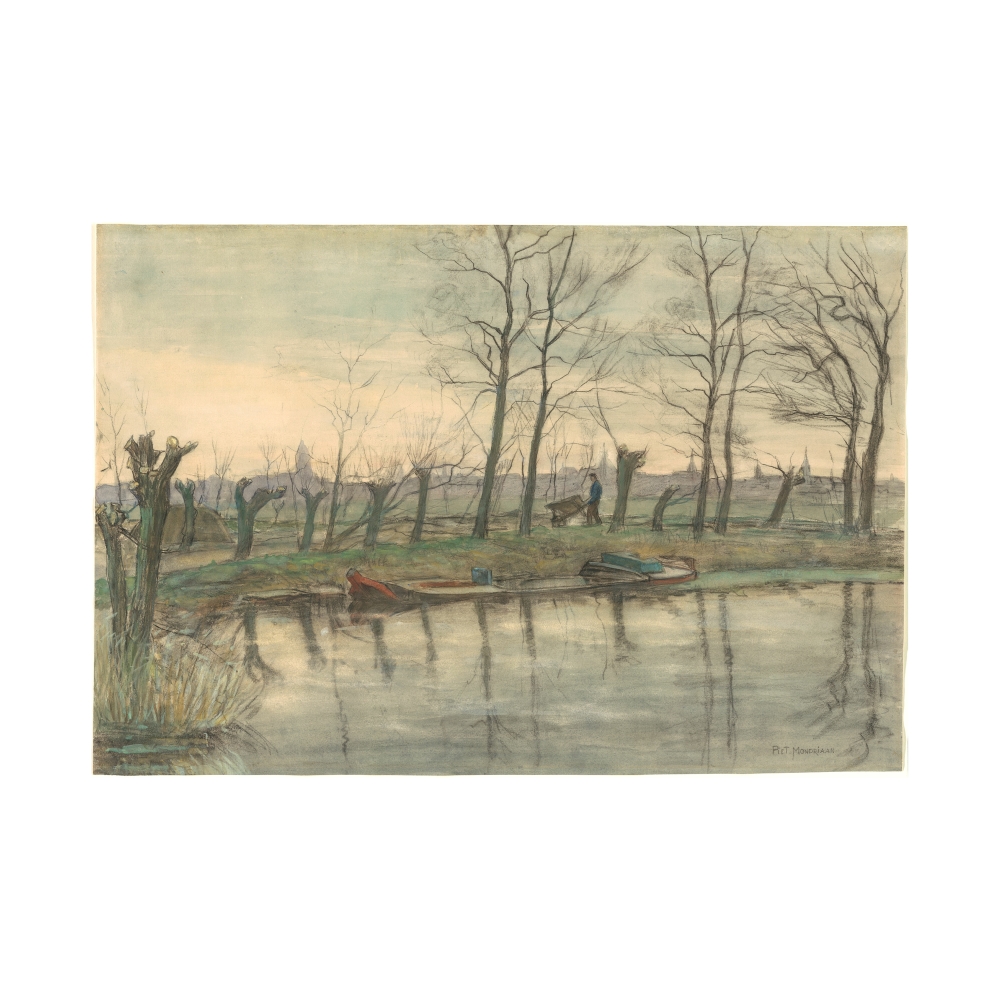
Amsterdam Skyline Viewed from the West
From USD 100
Nature & Landscapes · Flowers & Still Life


THE LIGHTO EDIT
Thoughtful works by artists near and far, chosen for the spaces we call home.
EXPLORE THE COLLECTIONMeet the artists and find the piece that feels like yours.
LIGHTO TO MEET YOUFIND YOUR POINT OF VIEW
Landscapes, abstract forms, and everyday beauty.
THE COLLECTION
Browse the works from LIGHTO's authorized artists.
No artworks match these filters. Try another color, subject, or orientation.
THE PEOPLE BEHIND THE ART
From established names to new perspectives, discover the makers in the LIGHTO collection.
From USD 100
Nature & Landscapes · Flowers & Still Life
| Size | Artwork only | With framing | Framing + acrylic |
|---|---|---|---|
| 88.2×60 cm | USD 100 | USD 220 | — |
Printing paper: etching fine art paper.
* The mounting and framing process is time-consuming and labor-intensive. Please allow 2–3 weeks for your order and thank you for your patience. * Photographic paper dimensions: 88.2 x 60 cm.
Hanging method:
Every aluminum frame has a hanging wire on the back. To hang it, you can attach a 3M damage-free hook to the wall (please purchase a version rated for at least 5 kg for safety).
Title: Amsterdam Skyline Viewed from the West
About the artist / Piet Mondrian
Piet Mondrian (March 7, 1872–February 1, 1944) was a Dutch painter regarded as one of the most important abstract artists of the 20th century. He was a founding member of De Stijl, a movement that emphasized geometric forms and pure abstraction in art.
Mondrian’s early work was influenced by Naturalism and Impressionism, but in the early 20th century he began moving toward abstract art. He gradually abandoned the depiction of nature, turning instead to horizontal and vertical straight lines, basic geometric shapes, and primary colors to express his pursuit of form and balance.
One of his best-known works is Composite Red, a painting that represents the height of his geometric abstraction. A series of horizontal and vertical black lines divides the painting into rectangles of different sizes, filled with primary colors such as red, yellow, and blue. This simplified formal language became Mondrian’s hallmark and had a profound influence on art in the second half of the 20th century.
Beyond painting, Mondrian also influenced design, architecture, and philosophy. His work embodies a search for the fundamental structures of life and the universe, expressed in his art through an exploration of balance, rhythm, and contrast.
Fine art print on etching paper.
Piet Mondrian (1872–1944) was a Dutch painter and a founder of De Stijl. He moved from representational painting toward an abstract language of vertical and horizontal lines and primary colors.