

THE LIGHTO EDIT
A little art
changes everything.
Thoughtful works by artists near and far, chosen for the spaces we call home.
EXPLORE THE COLLECTIONMeet the artists and find the piece that feels like yours.
LIGHTO TO MEET YOUFIND YOUR POINT OF VIEW
A place to begin.
Landscapes, abstract forms, and everyday beauty.
THE COLLECTION
Art to live with
Browse the works from LIGHTO's authorized artists.
No artworks match these filters. Try another color, subject, or orientation.
THE PEOPLE BEHIND THE ART
Meet the artists
From established names to new perspectives, discover the makers in the LIGHTO collection.
Sizes & prices
| Size | Artwork only | With framing | Framing + acrylic |
|---|---|---|---|
| 70×50 cm | — | USD 196 | USD 230 |
Product details
* The mounting and framing process is time-consuming and labor-intensive. Please allow 2–3 weeks for your order and thank you for your patience.
Artwork title:
Poster size: 70cm x 50cm
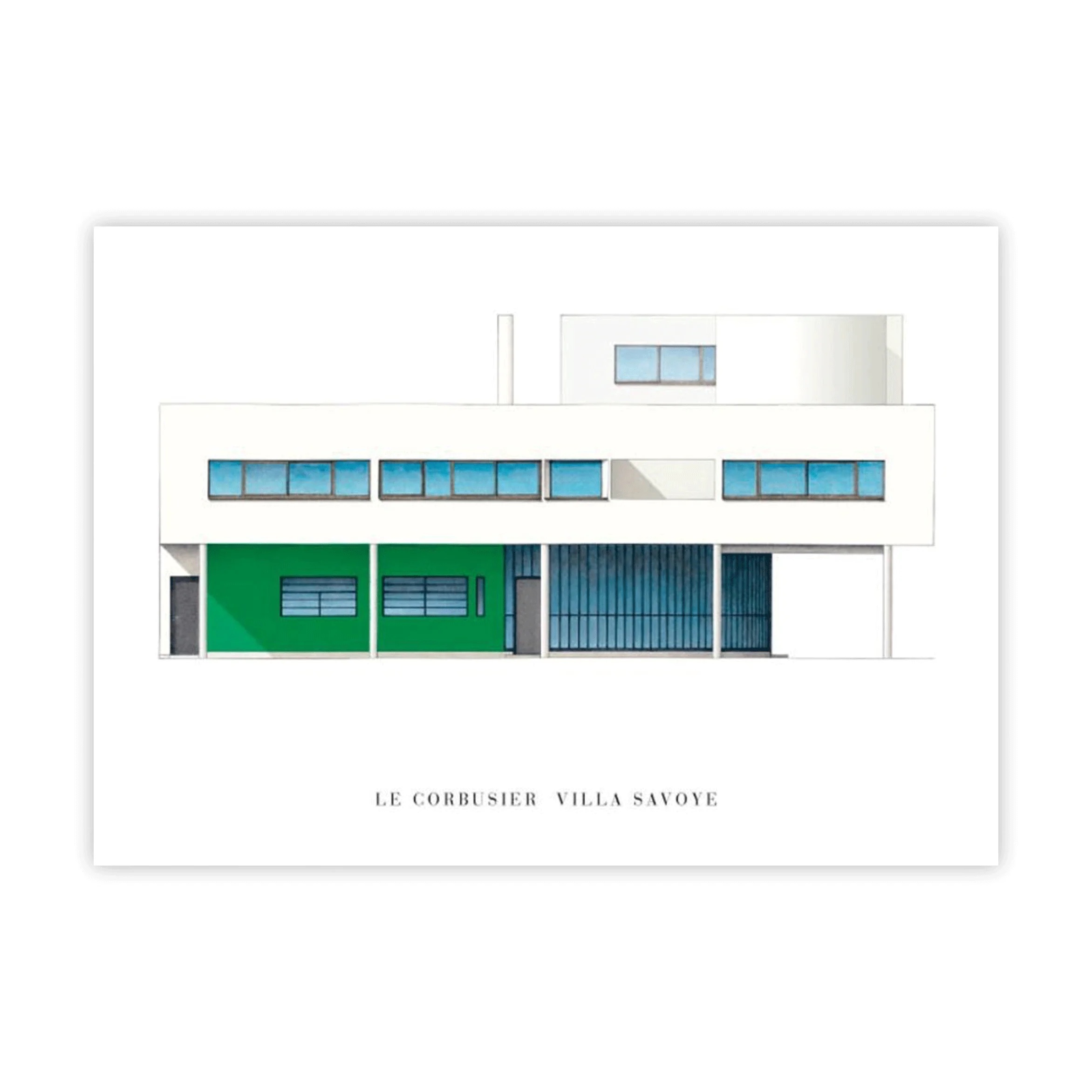
Introduction to the work/building: Villa Savoye
Villa Savoye is located in Poissy, northwest of Paris, France. Designed by Le Corbusier in 1928, it was originally built as a suburban retreat for the Savoye family. Salts Mill Shop calls it Le Corbusier’s first masterpiece; the official World Heritage website describes it as “an absolute icon of the Modern Movement.”
This building is important because it demonstrates Le Corbusier's “Five Points of Modern Architecture” almost in full: pilotis, a roof garden, a free plan, a free facade, and horizontal ribbon windows. Villa Savoye's official website also states that all five principles were applied to the building; UNESCO notes that Le Corbusier's Five Points of a New Architecture are exemplified by Villa Savoye.
Artist/architect introduction: Le Corbusier
Le Corbusier, born Charles-Édouard Jeanneret-Gris in La Chaux-de-Fonds, Switzerland, in 1887, adopted his pseudonym after 1920. Beyond architecture, he made paintings, sculptures, tapestries and furniture and wrote extensively on architecture and urban theory. The official World Heritage website notes that, despite lacking formal degrees in architecture or urban planning, he became internationally renowned in both fields.
He is one of the most important figures in 20th-century modern architecture. Early Le Corbusier is often associated with rationality, geometry, white houses, and functionalism, as exemplified by Villa Savoye. By the time of the chapel at Ronchamp, however, his architectural language had become freer, more substantial, and more sculptural. That is what makes this chapel special: rather than cold modernism, it is a work of modern architecture rich in spirituality, emotion, and spatial poetry.