

THE LIGHTO EDIT
A little art
changes everything.
Thoughtful works by artists near and far, chosen for the spaces we call home.
EXPLORE THE COLLECTIONMeet the artists and find the piece that feels like yours.
LIGHTO TO MEET YOUFIND YOUR POINT OF VIEW
A place to begin.
Landscapes, abstract forms, and everyday beauty.
THE COLLECTION
Art to live with
Browse the works from LIGHTO's authorized artists.
No artworks match these filters. Try another color, subject, or orientation.
THE PEOPLE BEHIND THE ART
Meet the artists
From established names to new perspectives, discover the makers in the LIGHTO collection.
Sizes & prices
| Size | Artwork only | With framing | Framing + acrylic |
|---|---|---|---|
| 30×40 cm | USD 43 | USD 96 | USD 113 |
| 50×70 cm | USD 93 | USD 173 | USD 206 |
| 60×81 cm | USD 130 | USD 243 | USD 280 |
Product details
* Photographic paper only (without framing): ships in 3–5 business days.
*If you choose mounting and framing: the process is time-consuming and labor-intensive, so please allow 2–3 weeks for your order and be patient.
Artwork dimensions: Small size: 30 x 40 cm Medium: 50 x 70 cm
Large size: 60 x 81 cm * Please message us about other sizes.
Giclée on etching art paper Hanging method:
Every aluminum frame has a hanging wire on the back. To hang it, you can attach a 3M damage-free hook to the wall (please purchase a version rated for at least 5 kg for safety).
* The original is a woodcut, which gives the marks a rougher texture.
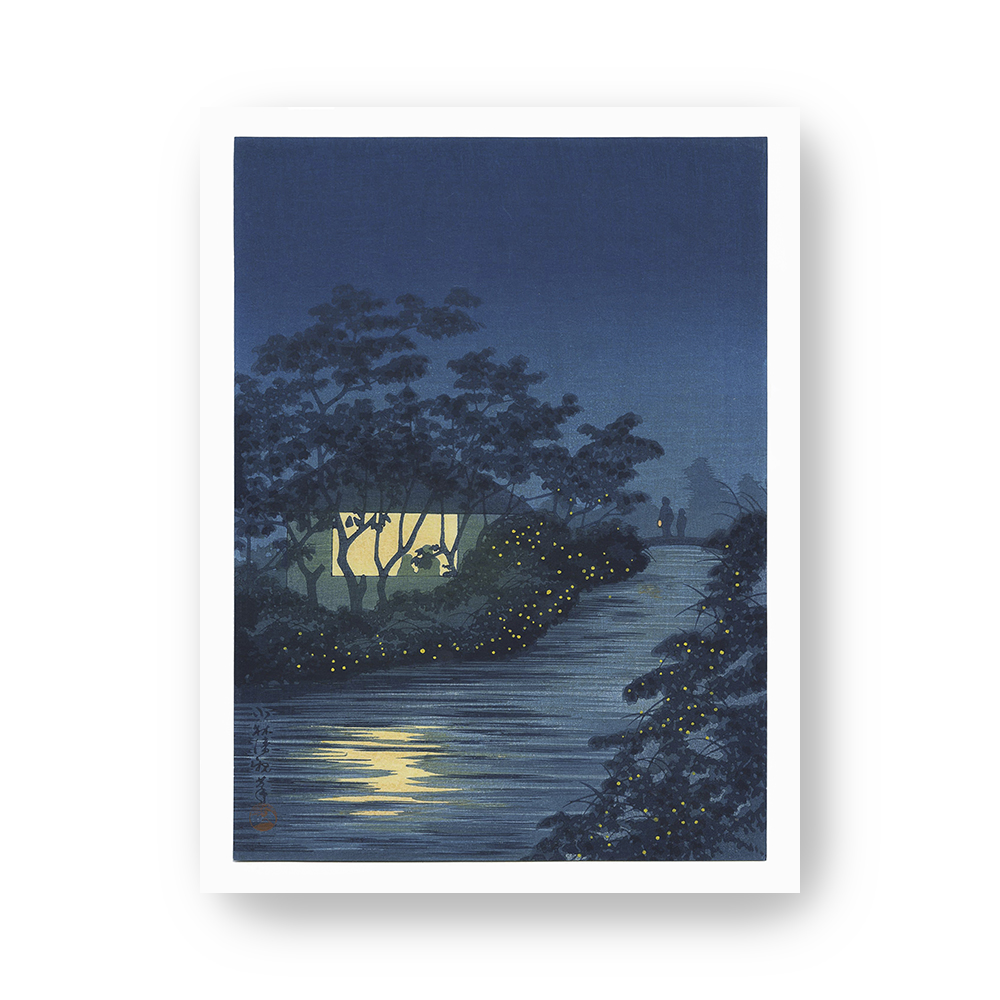
Kobayashi Kiyochika (September 10, 1847–November 28, 1915) was one of the most influential artists and printmakers of Japan’s Meiji period and is known as the “father of modern ukiyo-e.” Born into a samurai family in Edo (now Tokyo), he studied traditional Japanese painting in his early years under noted artists including Kano Fujitoshi and Kawanabe Kyosai, but later turned to woodblock printmaking. He is best known for combining traditional Japanese ukiyo-e techniques with elements of Western art, using naturalistic shading, perspective, and bold colors to create a distinctive style of “light pictures” (light prints).
Kiyochika’s works primarily depict the urban landscapes, social changes, and industrialization of Japan’s rapid modernization during the Meiji period. Featuring subjects such as railways, streetlights, smokestacks, war, and urban nightscapes, they have both artistic beauty and value as historical records. He also drew illustrations for newspapers, magazines, and books, and created numerous prints depicting the First Sino-Japanese War and the Russo-Japanese War. Some works were produced in collaboration with the writer Nishimori Takeki, influencing the visual style of propaganda at the time.
Although Kiyochika Kobayashi faced financial hardship for a time late in life, his artistic standing remains exceptionally high. He is regarded as a key figure in bringing traditional ukiyo-e into the modern era. Known for innovative techniques, outstanding compositions, and incisive social observation, his work profoundly influenced later shin-hanga artists such as Tsuchiya Koitsu and Kawase Hasui. Today, his prints are highly prized by museums and private collectors around the world and are an important cultural legacy of modern Japanese art.
Discover Japanese woodblock prints:
Production process and division of responsibilities
1. Artist (eshi)
Responsible for drawing the original design.
Provides the overall composition and the design of the figures and landscape.
For example: Katsushika Hokusai, Utagawa Hiroshige, and Kawase Hasui.
2. Publisher (hanmoto)
The heart of the entire team, akin to a “producer + distributor.”
Funded and planned the work, determined its theme, and collaborated with the artist.
Hire carvers and printers, and coordinate the schedule and quality.
Responsible for sales and promotion, and for deciding the size of the edition.
For example: Shozaburo Watanabe of the shin-hanga movement.
3. Block carver (horishi)
Transfer the artist’s original drawing onto a woodblock for carving.
Each color requires a dedicated woodblock.
The technical demands are extremely high: precision down to the millimeter is required, or the overprinted colors will be misaligned.
4. Printer (surishi)
Woodblocks and pigments are used to print the image layer by layer onto washi paper.
Responsible for color gradation, blending, and light-and-shadow effects.
The level of technical skill directly affects the work’s final appearance.