

THE LIGHTO EDIT
A little art
changes everything.
Thoughtful works by artists near and far, chosen for the spaces we call home.
EXPLORE THE COLLECTIONMeet the artists and find the piece that feels like yours.
LIGHTO TO MEET YOUFIND YOUR POINT OF VIEW
A place to begin.
Landscapes, abstract forms, and everyday beauty.
THE COLLECTION
Art to live with
Browse the works from LIGHTO's authorized artists.
No artworks match these filters. Try another color, subject, or orientation.
THE PEOPLE BEHIND THE ART
Meet the artists
From established names to new perspectives, discover the makers in the LIGHTO collection.
Sizes & prices
| Size | Artwork only | With framing | Framing + acrylic |
|---|---|---|---|
| 67×96 cm | — | USD 316 | USD 356 |
Product details
* The original poster was purchased on your behalf from overseas.
* The mounting and framing process is time-consuming and labor-intensive. Please allow 3–4 weeks for your order and thank you for your patience.
Why is my artwork uneven!? The difference between mounting and framing artwork.
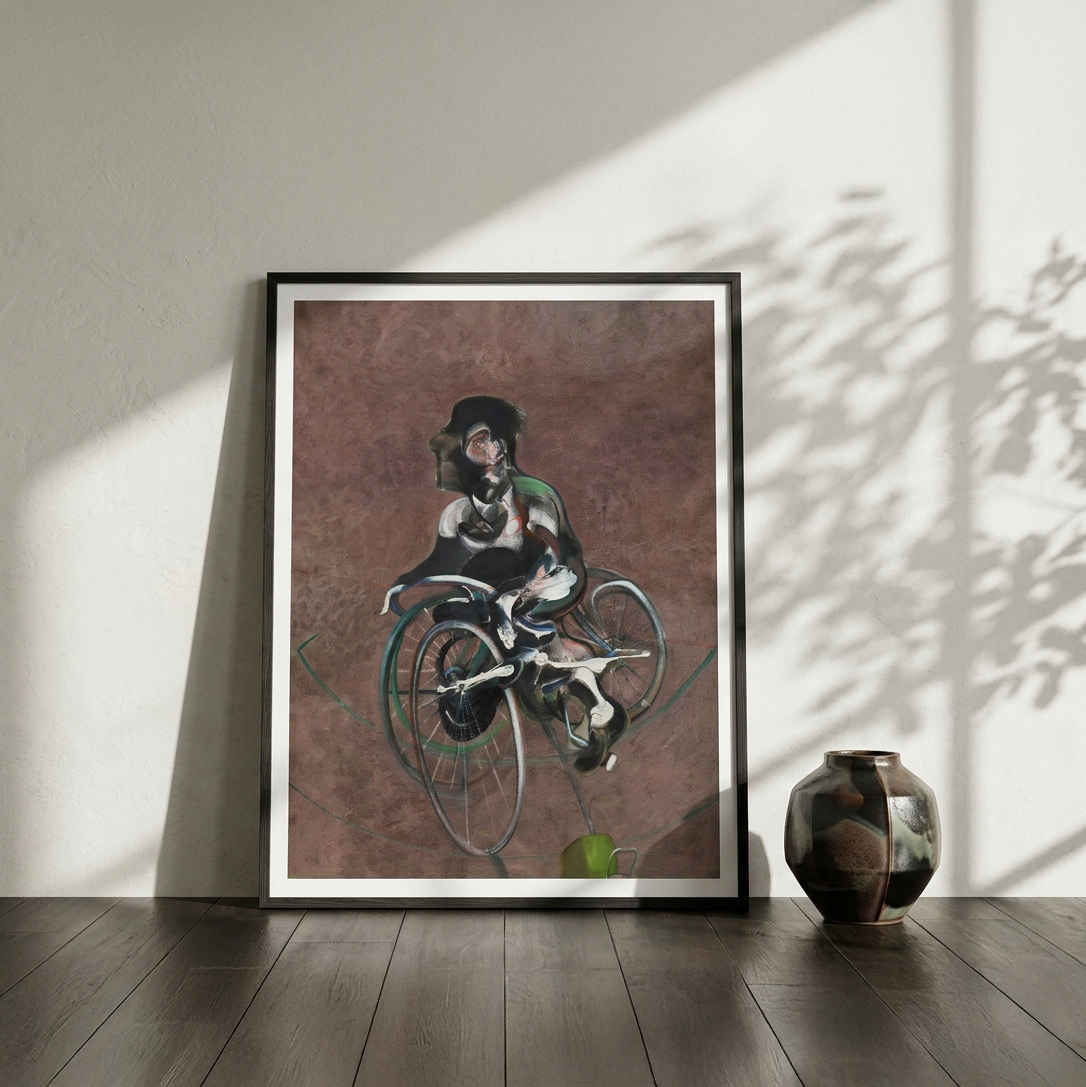
Title: Artwork medium: Poster Artwork dimensions: approximately 67*96cm
Artwork source: original museum poster Paper: Coated paper
Francis Bacon (1909–1992), known for his intense, unsettling figurative painting, is widely recognized as one of the twentieth century's most important painters.
The roots of his art can be traced to Surrealism between the two world wars. From the 1940s onward, Bacon gradually developed a highly personal mode of expression—one that could be described as “figurative action painting.” It combines violence and beauty, creating a powerful tension and sense of presence between brutality and tenderness.
Francis Bacon (1909–1992) was a British painter born in Dublin, Ireland, and one of the twentieth century's most influential and controversial figurative artists. Known for intense emotional tension, distorted human figures and profound explorations of existential anxiety and death, he has been described as a painter of humanity's inner fears.
🎨 Early Years and Artistic Development
Bacon's childhood was unsettled. After leaving home early, he lived in Paris and Berlin, absorbing modern artistic currents, especially Picasso's Cubism and Surrealism. He initially worked in design and decoration before turning to painting and gaining recognition in the 1930s.
His 1944 work Three Studies for Figures at the Base of a Crucifixion marked a turning point in his career. Its distorted figures, screaming silently, symbolize the fractured human spirit after the war and are considered among the most powerful works in modern art history.
🧠 Creative Style and Themes
Bacon's painting resists any single movement, though it is often described as expressive figuration. His paintings are characterized by:
Intense emotions and an aesthetic of violence
Distorted human anatomy Known for figures isolated in empty space.
He excels at using vivid blocks of color and blurred brushstrokes to place his images somewhere between clarity and chaos, creating a sense of existential anxiety and tragedy. Recurring themes include loneliness, death, desire, suffering, and the passage of time.
🧍♂️ Figures and Inspiration Bacon drew inspiration primarily from:
Classical art (such as Velázquez’s Portrait of Pope Innocent X)
Photography and cinematic imagery (such as shots from Eisenstein's films)
His own emotions and his partners (the death of George Dyer, in particular, affected him deeply).
His “Pope series” and “triptychs” are particularly well known. The figures in these paintings are often trapped in transparent cubic spaces, like stages or cages, symbolizing psychological confinement and the struggles of human nature.
🏛️ Achievements and Influence
Francis Bacon held important solo exhibitions in London, Paris and New York, including:
1985: retrospective at the Tate Gallery, London.
1992: retrospective at the Museo del Prado, Madrid—his final major exhibition during his lifetime.
His work profoundly influenced artists including Lucian Freud, Anselm Kiefer, Georg Baselitz, and Damien Hirst. Bacon is regarded as an emblematic figure in postwar British art and as a “painter of human existence.”
🕯️ Later Years and Legacy
Bacon spent his later years in Madrid, Spain, where he died of pneumonia in 1992. Today, his work is highly sought after on the art market, for example:
Three Studies of Lucian Freud (1969) sold for US$142 million in 2013, setting a world record at the time.
Bacon's legacy is more than distorted images and violence. It is a profound scrutiny of human nature, exposing pain, desire and loneliness and compelling viewers to confront life's most primal truths.
Paper & medium
Original poster; size and framing options are listed above.