

THE LIGHTO EDIT
A little art
changes everything.
Thoughtful works by artists near and far, chosen for the spaces we call home.
EXPLORE THE COLLECTIONMeet the artists and find the piece that feels like yours.
LIGHTO TO MEET YOUFIND YOUR POINT OF VIEW
A place to begin.
Landscapes, abstract forms, and everyday beauty.
THE COLLECTION
Art to live with
Browse the works from LIGHTO's authorized artists.
No artworks match these filters. Try another color, subject, or orientation.
THE PEOPLE BEHIND THE ART
Meet the artists
From established names to new perspectives, discover the makers in the LIGHTO collection.
Sizes & prices
| Size | Artwork only | With framing | Framing + acrylic |
|---|---|---|---|
| 60×80 cm | — | USD 427 | USD 467 |
Product details
* The mounting and framing process is time-consuming and labor-intensive. Please allow 2–3 weeks for your order and thank you for your patience.
Poster size: 60*80cm
Year of release: 2020
Original exhibition poster
Title:
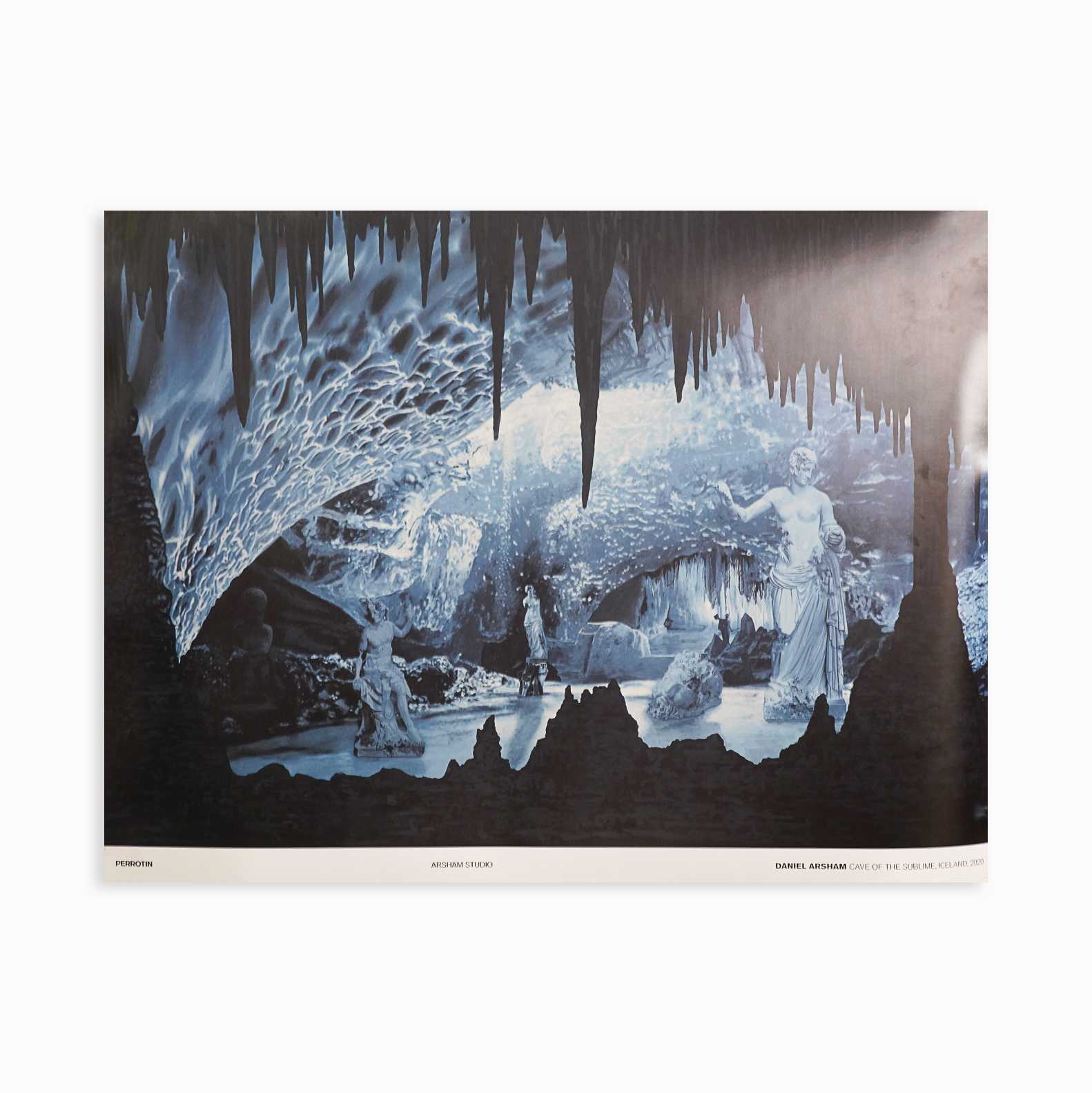
Daniel Arsham 《Cave of the Sublime, Iceland》 2020
The original work is acrylic on canvas; the large-format version measures approximately 227.5 × 318.1 × 13 cm.
The Icelandic cave resembles a naturally formed temple, yet classical statues have been placed inside it, as though remnants of human civilization had been sealed in an ice-blue underground space. The blue-and-white palette makes the entire scene feel like a frozen memory, or a future archaeological site. The statues are not merely decorations; they seem like evidence left behind after civilization has been swallowed by time.
Why is it called “Sublime”?
In art history, “sublime” refers not simply to beauty, but to the shock, sense of smallness, and awe one feels when confronted by vast natural phenomena such as glaciers, caves, waves, and mountains.
Humans regard classical civilization as eternal, but before the greater forces of nature and time, civilization is merely a relic in a cave. What makes this image so compelling is its “coldness”—but it is not an empty coldness. Its atmosphere blends a museum, a temple, an apocalyptic film, and Iceland’s natural landscape. Daniel Arsham excels at this: his work looks fashionable, but underneath, it asks “what time will do to the things we leave behind.”
**Actual photograph of the poster
About the artist / Daniel Arsham(,1980–
An American contemporary artist born in Cleveland who now works primarily in New York. Perrotin’s gallery information also states that he was born in Cleveland, Ohio, in 1980 and now lives in New York.
Artist introduction: Daniel Arsham
Daniel Arsham's best-known concept is fictional archaeology, also associated with his Future Relics. He makes contemporary objects, classical statues and architectural spaces appear eroded, crystallized and weathered by time, creating a dislocation: are these ancient ruins, or traces of modern civilization unearthed by people in the future?
He is particularly skilled at combining several elements:
A sense of classical civilization: Greco-Roman statues, temples, and archaeological fragments. A post-apocalyptic, futuristic feel: weathering, breakage, erosion, crystallization, and gray-white or icy-blue tones. A pop-culture sensibility: he has also collaborated across disciplines with Pokémon, Dior, Tiffany, Porsche, and others. A sense of displaced time: the works appear to come from the past, present, and future at once.
Ocula likewise identifies future history and fictional archaeology as central to his practice. He transforms contemporary objects and architecture into fossil-like forms, exploring time, erosion and cultural memory.
Paper & medium
Original poster; size and framing options are listed above.
About the artist
An American contemporary artist born in Cleveland who now works primarily in New York. Perrotin’s gallery information also states that he was born in Cleveland, Ohio, in 1980 and now lives in New York.
Daniel Arsham's best-known concept is fictional archaeology, also associated with his Future Relics. He makes contemporary objects, classical statues and architectural spaces appear eroded, crystallized and weathered by time, creating a dislocation: are these ancient ruins, or traces of modern civilization unearthed by people in the future?
A sense of classical civilization: Greco-Roman statues, temples, and archaeological fragments. A post-apocalyptic, futuristic feel: weathering, breakage, erosion, crystallization, and gray-white or icy-blue tones. A pop-culture sensibility: he has also collaborated across disciplines with Pokémon, Dior, Tiffany, Porsche, and others. A sense of displaced time: the works appear to come from the past, present, and future at once.
Ocula likewise identifies future history and fictional archaeology as central to his practice. He transforms contemporary objects and architecture into fossil-like forms, exploring time, erosion and cultural memory.