

THE LIGHTO EDIT
A little art
changes everything.
Thoughtful works by artists near and far, chosen for the spaces we call home.
EXPLORE THE COLLECTIONMeet the artists and find the piece that feels like yours.
LIGHTO TO MEET YOUFIND YOUR POINT OF VIEW
A place to begin.
Landscapes, abstract forms, and everyday beauty.
THE COLLECTION
Art to live with
Browse the works from LIGHTO's authorized artists.
No artworks match these filters. Try another color, subject, or orientation.
THE PEOPLE BEHIND THE ART
Meet the artists
From established names to new perspectives, discover the makers in the LIGHTO collection.
Sizes & prices
| Size | Artwork only | With framing | Framing + acrylic |
|---|---|---|---|
| 66×100 cm | — | USD 276 | USD 313 |
Product details
Artist: Damien Hirst
ㄊ
Born in Bristol, Damien Hirst is one of the leading figures among the Young British Artists. He dominated the development of British art in the 1990s and enjoys a strong international reputation. Hirst enrolled at Goldsmiths, University of London, in September 1986. In 1995, he won the Turner Prize, a major British contemporary art award. Hirst is deeply interested in the finite nature of biological organisms. His Natural History series, in which he immerses animal carcasses in formaldehyde solution, is extremely well known.
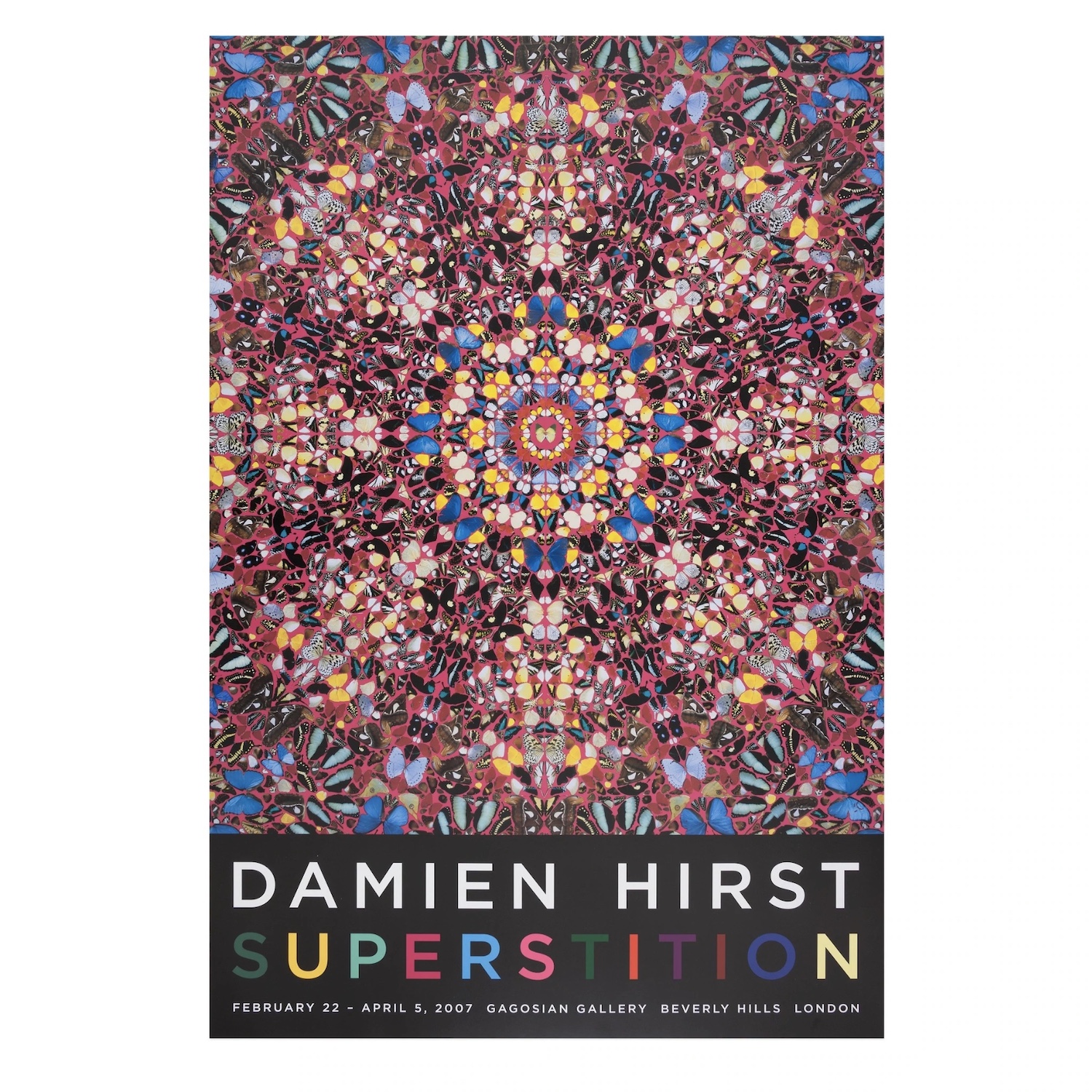
This poster featuring Homage to a Government—The Dwelling Place (2006) was produced in 2007, in conjunction with Damien Hirst: Superstition at Gagosian, Davies Street, London, and Gagosian, Beverly Hills. The exhibition included Kaleidoscope paintings that reference stained-glass windows in their intricate geometric patterns. Hirst has given each painting two titles: the first taken from High Windows by the English poet Philip Larkin, whose fatalistic, colloquial writings speak to a seemingly shared extinguished faith, and the second making direct reference to religious iconography.
“In the exhibition In and Out of Love, Hirst enclosed 9,000 butterflies in a sealed, all-white space where visitors could see them feeding up close. Although the work was avant-garde, it drew considerable criticism because many of the 9,000 butterflies died during the exhibition from causes other than natural ones, including collisions with walls and being stepped on by visitors. Hirst explained that professional entomologists were caring for the butterflies, but the work remains highly controversial.”
Artwork title: SUPERSTITION Dimensions: 39 × 26 inches (100 × 66 cm)
Edition: open edition, 2020
Original poster from an American gallery
Black frame mock-up:
Dark walnut-colored aluminum frame mockup:
Mockup with a silver frame:
Paper & medium
Original poster; size and framing options are listed above.
About the artist
Born in Bristol, Damien Hirst is one of the leading figures among the Young British Artists. He dominated the development of British art in the 1990s and enjoys a strong international reputation. Hirst enrolled at Goldsmiths, University of London, in September 1986. In 1995, he won the Turner Prize, a major British contemporary art award. Hirst is deeply interested in the finite nature of biological organisms. His Natural History series, in which he immerses animal carcasses in formaldehyde solution, is extremely well known.
This poster featuring Homage to a Government—The Dwelling Place (2006) was produced in 2007, in conjunction with Damien Hirst: Superstition at Gagosian, Davies Street, London, and Gagosian, Beverly Hills. The exhibition included Kaleidoscope paintings that reference stained-glass windows in their intricate geometric patterns. Hirst has given each painting two titles: the first taken from High Windows by the English poet Philip Larkin, whose fatalistic, colloquial writings speak to a seemingly shared extinguished faith, and the second making direct reference to religious iconography.
“In the exhibition In and Out of Love, Hirst enclosed 9,000 butterflies in a sealed, all-white space where visitors could see them feeding up close. Although the work was avant-garde, it drew considerable criticism because many of the 9,000 butterflies died during the exhibition from causes other than natural ones, including collisions with walls and being stepped on by visitors. Hirst explained that professional entomologists were caring for the butterflies, but the work remains highly controversial.”