

THE LIGHTO EDIT
A little art
changes everything.
Thoughtful works by artists near and far, chosen for the spaces we call home.
EXPLORE THE COLLECTIONMeet the artists and find the piece that feels like yours.
LIGHTO TO MEET YOUFIND YOUR POINT OF VIEW
A place to begin.
Landscapes, abstract forms, and everyday beauty.
THE COLLECTION
Art to live with
Browse the works from LIGHTO's authorized artists.
No artworks match these filters. Try another color, subject, or orientation.
THE PEOPLE BEHIND THE ART
Meet the artists
From established names to new perspectives, discover the makers in the LIGHTO collection.
Sizes & prices
| Size | Artwork only | With framing | Framing + acrylic |
|---|---|---|---|
| 50×70 cm | — | USD 163 | USD 193 |
Product details
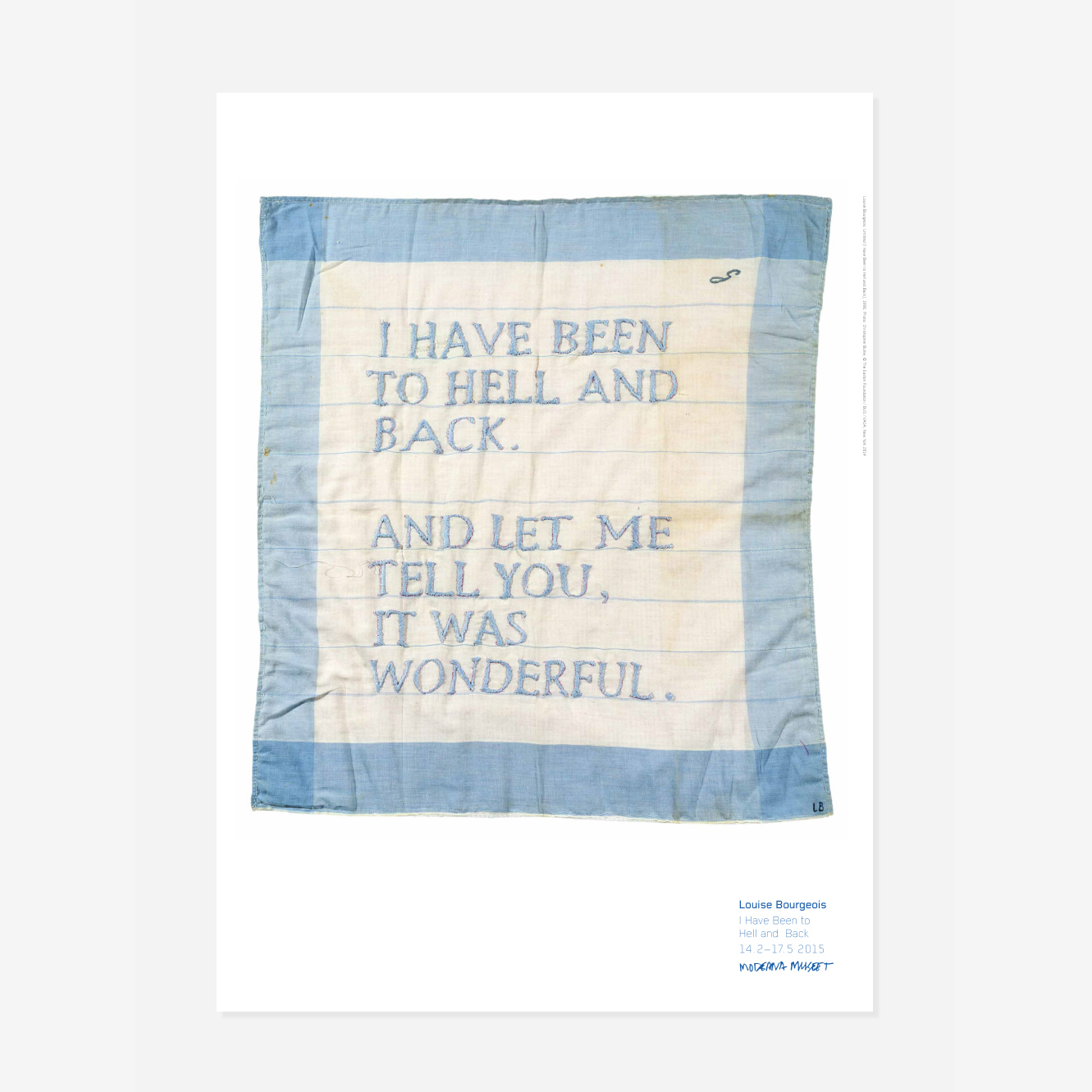
Artwork title: I Have Been to Hell and Back
Original museum poster
Formal characteristics and artistic language
Fabric and embroidery: Using a handkerchief as the base and stitching text onto it through embroidery was a practice Bourgeois often employed in her later years—she had an emotional and symbolic attachment to fabric and textiles. The choice of materials in this work—soft, everyday cloth versus serious content—creates tension between form and meaning.
Text as an artistic element: Text is the subject of this work: “I HAVE BEEN TO HELL AND BACK. AND LET ME TELL YOU, IT WAS WONDERFUL.” Through concise yet powerful language, it conveys complex emotions. Here, Bourgeois treats text as part of both the visual and emotional expression.
Black humor and a defiant tone: The statement has an ironic, darkly humorous edge. She says she has been through hell—a metaphor for psychological or life’s suffering—then adds, “…it is wonderful.” This contradiction, or dual tone, is characteristic of her later work, where pain and rebirth, wounds and humor, destruction and hope coexist.
Autobiographical memory and the will to survive: Throughout her life, Bourgeois’s work was closely connected to her personal memories, psychological trauma, family experiences, and entanglements of love and hate. She brought these inner experiences into her work. This embroidered text piece is a reflection on and expression of the emotions and experiences of her later years.
Symbolic significance in the exhibition: The exhibition held at Tokyo’s Mori Art Museum in 2024–2025 used I have been to hell and back. And let me tell you, it was wonderful. as its subtitle. Taken from this work, the line underscores its symbolic role in the context of her art as a whole.
Interpretations and possible meanings
Although outwardly simple, this work holds powerful meaning and tension on multiple levels. Here are several ways to interpret it:
A Testament to Survival. Through words such as “I have been to hell and back,” the artist declares herself a survivor: despite pain and trauma, she is still alive and has transformed those experiences into an artistic language uniquely her own. The exhibition also interprets this as her “resilience and will to live.”
Subverting language and gender: Embroidery and handkerchiefs—traditional forms of “feminine” craft—are often seen as symbols of delicacy and gentleness. Using these materials to express a forceful declaration of survival challenges established gender and cultural stereotypes. A form often associated with the marginalization of women is used to reveal inner strength, creating a sense of tension. This is a recurring approach in Bourgeois’s late work.
Contradictory emotions and humor: “…it was wonderful” seems optimistic and affirmative, yet it contrasts sharply with the suffering of having “been to hell” mentioned earlier. This contradiction may suggest that suffering is not necessarily destructive; it can also give rise to insight, transformation, and strength. Bourgeois’s work often reveals the complexity of human nature through such tensions.
The dimension of memory and personal history: According to the exhibition materials, this phrase came from the way she wrote in her diary and was embroidered onto a handkerchief used by her late husband. This makes the work more than an abstract declaration; it is deeply rooted in her life and memories.
Artist: Louise Bourgeois
“Drawing is a feather of thoughts, which I catch in midair and put down on paper.” —Louise Bourgeois
Louise Joséphine Bourgeois (December 25, 1911–May 31, 2010) was a French-American artist. Though best known for large sculptures and installations, she was also a prolific painter and printmaker. Throughout her long career, she explored domesticity and family, sexuality and the body, death and the unconscious. Connected to childhood experiences, these themes formed what she regarded as a therapeutic process. Although she exhibited alongside Abstract Expressionists and her work shared affinities with Surrealism and feminist art, she was not formally affiliated with a particular movement.
Louise Bourgeois's drawings can be understood as self-portraits defining her identity and sense of home, reflecting the homesickness she experienced after leaving her homeland to settle in the United States. They also reveal her familiarity with European avant-garde movements such as Surrealism and the flourishing New York art scene of the 1940s. Her study of French and Italian Renaissance drawings and prints at the Metropolitan Museum of Art further reflects her interest in architecture and three-dimensional space.
Further reading:
https://www.marieclaire.com.tw/lifestyle/art/64228
http://www.mottimes.com/cht/article_detail.php?serial=1144&type=1
Paper & medium
Original poster; size and framing options are listed above.
About the artist
“Drawing is a feather of thoughts, which I catch in midair and put down on paper.” —Louise Bourgeois
Louise Joséphine Bourgeois (December 25, 1911–May 31, 2010) was a French-American artist. Though best known for large sculptures and installations, she was also a prolific painter and printmaker. Throughout her long career, she explored domesticity and family, sexuality and the body, death and the unconscious. Connected to childhood experiences, these themes formed what she regarded as a therapeutic process. Although she exhibited alongside Abstract Expressionists and her work shared affinities with Surrealism and feminist art, she was not formally affiliated with a particular movement.
Louise Bourgeois's drawings can be understood as self-portraits defining her identity and sense of home, reflecting the homesickness she experienced after leaving her homeland to settle in the United States. They also reveal her familiarity with European avant-garde movements such as Surrealism and the flourishing New York art scene of the 1940s. Her study of French and Italian Renaissance drawings and prints at the Metropolitan Museum of Art further reflects her interest in architecture and three-dimensional space.
https://www.marieclaire.com.tw/lifestyle/art/64228
http://www.mottimes.com/cht/article_detail.php?serial=1144&type=1