

THE LIGHTO EDIT
A little art
changes everything.
Thoughtful works by artists near and far, chosen for the spaces we call home.
EXPLORE THE COLLECTIONMeet the artists and find the piece that feels like yours.
LIGHTO TO MEET YOUFIND YOUR POINT OF VIEW
A place to begin.
Landscapes, abstract forms, and everyday beauty.
THE COLLECTION
Art to live with
Browse the works from LIGHTO's authorized artists.
No artworks match these filters. Try another color, subject, or orientation.
THE PEOPLE BEHIND THE ART
Meet the artists
From established names to new perspectives, discover the makers in the LIGHTO collection.
Sizes & prices
Product details
* The mounting and framing process is time-consuming and labor-intensive. Please allow 2–3 weeks for your order and thank you for your patience.
Poster size: 50 x 64 cm
Original exhibition poster
Title:
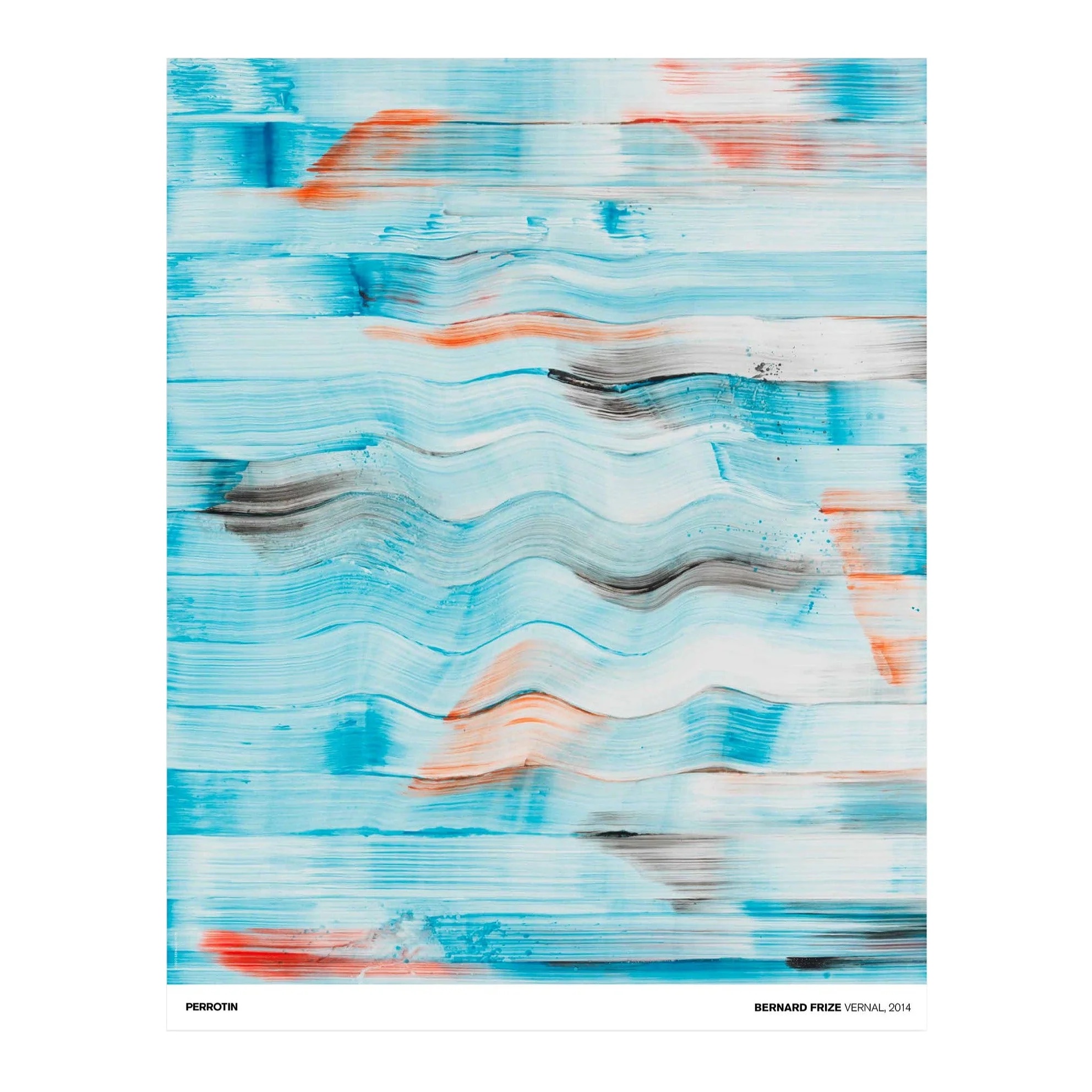
《Vernal》
The word “vernal” means “of spring” or “springtime.” The title itself therefore carries a sense of seasonality: rather than weighty abstraction, it suggests spring plants and the feeling of light and air beginning to move.
Bernard Frize's paintings often show how a painting is made rather than depict a particular scene. He establishes a procedure in which brushes, paint, resin, gravity, speed and chance work together. Ocula's account likewise emphasizes his attention to process: he devises rules and constraints in advance, then explores their possible visual outcomes.
**Actual photograph of the poster**
About the artist
Bernard Frize (born 1949) is a French contemporary abstract painter, born in Saint-Mandé, France, and now working primarily in Berlin.
What is he painting?
Frize's paintings may appear beautiful, flowing and vividly colored, but his primary concern is not expressing inner emotion. Instead, he investigates:
If painting is left to rules, tools, materials, and chance, what will ultimately emerge?
He often begins by setting rules: tying several pens together, having several people pull a brush at once, dragging paint in a fixed direction, letting paint mix on its own, or allowing resin or acrylic paint to leave marks on the canvas. Marian Goodman Gallery also notes that he has long worked with “constraints, procedures, and rules” to reduce the artist’s subjective expression, making the work seem as though it were generated by the system itself.
So he is not a traditional painter who says, “I have an emotion, so I paint it.” He is more like someone designing an experiment in painting.
Distinctive features of the work
His works typically have several distinctive features:
1. The colors are captivating. Vivid lines, translucent paint, and interlacing bands of color are common; at times, the images resemble weaving, flowing liquid, or a spectrum of light.
2. The brushstrokes are not spontaneous; they are governed by rules. Each mark you see often results from a predetermined way of working.
3. Chance matters. Although he devises rules, the flow of paint, the weight of the brushes, and friction against the canvas surface all produce results that cannot be fully controlled. Rice University’s Moody Center also describes his abstract compositions as combining predetermined rules with chance experimentation—a process-centered approach to painting.
IV. He challenges “authorship.” Frize deliberately makes his works look less like expressions of an artist’s personal emotions and more like the results of carrying out a set of procedures. This gives his paintings a mechanical, decorative, and rational quality, as well as a deeply affecting visual appeal.
How can we understand his work?
When looking at a painting by Bernard Frize, there is no need to rush to ask, “What does it depict?” A better question is:
How was this painting made? How did the paint move? Where are the rules? And where does chance come in?
His works seem to take the act of “painting” apart: brushes, paint, gestures, speed, direction, time, and the drying process all become protagonists.
Place in art history
Bernard Frize is an important figure in contemporary abstract painting. His work neither emphasizes emotional eruption in the manner of Abstract Expressionism nor adopts the complete austerity associated with Minimalism. Its fascination lies in producing sensuous images through rational rules.
In one sentence, he is:
Bernard Frize is a French abstract painter who turns painting into an experimental system. Rather than depicting the world, his work allows paint, rules and chance to generate an image together.
Paper & medium
Original poster; size and framing options are listed above.
About the artist
Bernard Frize (born 1949) is a French contemporary abstract painter, born in Saint-Mandé, France, and now working primarily in Berlin.
Frize's paintings may appear beautiful, flowing and vividly colored, but his primary concern is not expressing inner emotion. Instead, he investigates:
If painting is left to rules, tools, materials, and chance, what will ultimately emerge?
He often begins by setting rules: tying several pens together, having several people pull a brush at once, dragging paint in a fixed direction, letting paint mix on its own, or allowing resin or acrylic paint to leave marks on the canvas. Marian Goodman Gallery also notes that he has long worked with “constraints, procedures, and rules” to reduce the artist’s subjective expression, making the work seem as though it were generated by the system itself.
So he is not a traditional painter who says, “I have an emotion, so I paint it.” He is more like someone designing an experiment in painting.
1. The colors are captivating. Vivid lines, translucent paint, and interlacing bands of color are common; at times, the images resemble weaving, flowing liquid, or a spectrum of light.
2. The brushstrokes are not spontaneous; they are governed by rules. Each mark you see often results from a predetermined way of working.
3. Chance matters. Although he devises rules, the flow of paint, the weight of the brushes, and friction against the canvas surface all produce results that cannot be fully controlled. Rice University’s Moody Center also describes his abstract compositions as combining predetermined rules with chance experimentation—a process-centered approach to painting.
IV. He challenges “authorship.” Frize deliberately makes his works look less like expressions of an artist’s personal emotions and more like the results of carrying out a set of procedures. This gives his paintings a mechanical, decorative, and rational quality, as well as a deeply affecting visual appeal.
When looking at a painting by Bernard Frize, there is no need to rush to ask, “What does it depict?” A better question is:
How was this painting made? How did the paint move? Where are the rules? And where does chance come in?
His works seem to take the act of “painting” apart: brushes, paint, gestures, speed, direction, time, and the drying process all become protagonists.
Bernard Frize is an important figure in contemporary abstract painting. His work neither emphasizes emotional eruption in the manner of Abstract Expressionism nor adopts the complete austerity associated with Minimalism. Its fascination lies in producing sensuous images through rational rules.
Bernard Frize is a French abstract painter who turns painting into an experimental system. Rather than depicting the world, his work allows paint, rules and chance to generate an image together.